




HARDLY noticed in this pandemic time is a very important stride towards better oral health.
In May, the World Health Organization’s (WHO) World Health Assembly called for the development of a global oral health strategy next year and an action plan by 2023.
Oral health is a neglected issue on the global health agenda and the call from WHO’s member states was a very important milestone.
For the new oral health policy framework to move forward, it needs “to be bold to make a tangible difference,” observes an article published shortly after in June in the medical journal The Lancet.
The lead author is Habib Benzian of the Department Epidemiology and Health Promotion, WHO Collaborating Center for Quality Improvement and Evidence-based Dentistry, College of Dentistry, New York University.
Several key issues must be addressed, the article says. Among them are the public investments needed in low- and middle-income countries.
Investing on oral health, combined with reallocation of spending towards cost-effective best-buy interventions, must be in place, says Dr. Benzian.
The persisting financing gaps for non-communicable diseases apply even more for oral diseases, he writes.
An estimated 90 percent of the global direct expenditures of more than US$350 billion is spent in only 6 percent of countries. Half of all countries, mainly low-income and middle-income countries, spend less than US$10 per person each year on oral health.
“Out-of-pocket expenditures for oral health care are among the main drivers of catastrophic health expenditures,” Dr. Benzian points out.
Another interesting observation is that sugar must be tackled as a major and common risk factor in getting oral diseases – along with other unhealthy foods.
The mention of sugar is particularly telling. The Lancet article points to “compelling evidence” of the link between the intake of free sugars and dental caries or tooth decay.
The link was, in fact, the foundation for WHO’s 2015 guideline on sugars intake for adults and children.
The established link between sugar and dental caries offers an additional scientific basis and currently underused opportunity for demanding stronger public policy to protect health, including pro-health taxes to reduce sugar consumption, Dr. Benzian states.
Policies that limit the negative impacts of marketing and selling of unhealthy products in public settings, such as schools, workplaces or health-care facilities, must be reinforced and tightened, particularly for sugary foods and beverages, he writes.
The effective WHO policies on tobacco control need to be applied to sugar reduction as well, he continues.
Oral health care must also be part of Universal Health Care requires essential, cost-effective intervention packages, Dr. Benzian says.
Policy decisions on oral health must be data-driven and evidence-informed.
Dr. Benzian says that oral issues are among the large and unequal burden of preventable diseases.
Case numbers of untreated oral diseases have more than doubled between 1990 and 2017 in poor countries and increased by more than half worldwide.
“Achieving sustained and affordable access to essential oral health-care services and prevention for almost 3.5 billion people affected by untreated oral diseases requires impactful policy solutions and radical system reform,” Dr. Benzian argues.
“Striving for greater equity across all dimensions of oral health, including reducing disease burden and risk exposure, expanding access to care and prevention, and improving empowerment and participation, must be foundational for the new oral health policy framework.”
***
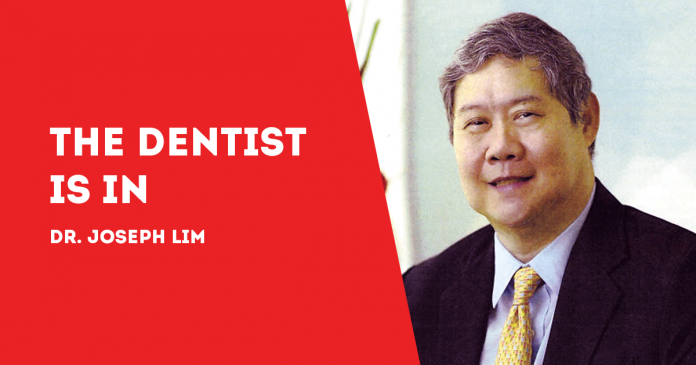
Dr. Joseph D. Lim is the former Associate Dean of the UE College of Dentistry, former Dean of the College of Dentistry, National University, past president and honorary fellow of the Asian Oral Implant Academy, and honorary fellow of the Japan College of Oral Implantologists and Honorary Life Member of Thai Association of Dental Implantology. For questions on dental health, e-mail jdlim2008@gmail.com or text 0917-8591515./PN
