
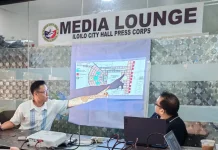

EARLY this week, I joined the two-day writeshop organized by the Sangguniang Panlungsod (SP) of Tagbilaran City to help craft the city’s Environmental Management Code. Stakeholders were divided into land, water, air, and biodiversity sectors. Being a resident of Barangay Taloto, where my parents’ home is ensconced by centuries-old Acacia trees, and an advocate for nature, I naturally joined the biodiversity group to contribute to the chapter on biodiversity and ecosystems.
Why biodiversity matters
Biodiversity is crucial to our existence because we are all interconnected; nothing we do happens in a vacuum. We like to live under the illusion that we can chop down several trees or pave over a wetland without it impacting the rest of our lives, but nature doesn’t work that way. But I’m sure you already know that.
We may not speak the language of trees, birds, or bees, but our interaction happens daily. Every single living thing, including the non-living things like the soil and the rivers, is locked in a constant, daily conversation. We are like a giant web: You pull on one loose thread, and the whole thing shakes. Our elders wisely understood that protecting mangroves, for instance, safeguards a barangay from typhoons.
Humanity has never been a mere spectator to biodiversity; we are woven directly into its fabric. Thus, I feel good to contribute to the drafting of the chapter on biodiversity and ecosystems.
Mapping local conservation zones
During the writeshop, we identified several local biodiversity conservation areas subject to detailed delineation, mapping, assessment, and management planning:
a) Cabawan: Forest and Agricultural Biodiversity Zone;
b) Bool: Banat-i Hill;
c) Ubujan and Manga: Elly Hill;
d) Bool: Mangrove Areas;
e) Mansasa: Mangrove Areas;
f) Taloto, Ubujan, Manga: Mangrove Forest;
g) Taloto: Presence of centuries-old, majestic Acacia trees;
h) Taloto, Dampas, and Ubujan: Wetlands, ponds, lakes, and inland water ecosystems;
i) Cabawan, Poblacion I, Taloto, and other identified areas: Caves and sinkholes (Pi-ong);
j) Identified natural depression areas, natural sinkholes, and natural drainage systems; and
k) Future Zones: Areas identified through ongoing assessments by city research teams and the academe.
Legalizing “Tree Growing” and nature-based solutions
Under the new code, the distinction between “tree planting” (the mere physical act of putting a sapling in the ground) and “tree growing” (ensuring long-term survival and maturity) is legally institutionalized. Rather than viewing recurring urban challenges like flash floods and soaring heat indices as problems solved purely by pouring concrete, the city is mandating nature-based solutions. Major subdivisions, institutional developments, and commercial complexes must now dedicate at least two percent (2%) of their total land area strictly to green infrastructure and ecological landscaping such as rain gardens, permeable surfaces, and vertical landscapes. This requirement stands entirely separate from standard, mandatory open spaces required by national law.
To deter thoughtless clearing, the ordinance introduces a steep tree-replacement policy. Any entity seeking a permit to cut down a tree must undergo a mandatory, multi-agency public consultation involving the affected Barangay and its constituents, and pay a massive ecological debt using native or endemic species at the following ratios:
a) 1:50 Ratio for trees cut for ordinary purposes
b) 1:100 Ratio for trees cut for development projects
c) 1:200 Ratio if a protected heritage tree is exceptionally allowed to be removed.
To ensure these are not just phantom trees on paper, the proposed Cabawan Forest and Agricultural Biodiversity Zone is designated as the official, long-term sanctuary for these initiatives. Permittees are legally bound to maintain a strict 75% survival rate over three years, verified through mandatory status reports submitted every six months to the Tagbilaran City Environmental Management Office.
Saving “Baguio Drive” and protecting the invisible topography
Anyone who has traveled along Carlos P. Garcia North Avenue, particularly through Taloto, knows the iconic stretch of road locals call “Baguio Drive,” cooled by a dense, sweeping canopy of historic, centuries-old Acacia trees. Under this code, these giants are granted absolute heritage protection, shielded from being cut, poisoned, or earth-balled without rigorous evaluation and public consensus.
While these grand canopies are impossible to miss, much of Tagbilaran’s vital biodiversity thrives completely out of plain sight. The city sits upon a unique, vulnerable geology characterized by karst depressions, caves, sinkholes locally known as Pi-ong, and natural drainage systems. These hidden geological features, along with coastal mangrove forests and inland wetlands, are given a status of absolute protection. Dumping solid waste, discharging wastewater, or initiating unauthorized earth-filling within these delicate ecosystems is now strictly prohibited.
Integration and a shared green trust
The ordinance recognizes that policing alone cannot sustain an urban forest. By establishing a dedicated Forests, Urban Trees, and Biodiversity Trust Fund, sustained by environmental fees, penalties, and grants, among others, the city balances enforcement with community incentives.
Through this trust fund, private landowners who nurture declared Heritage Trees on their property can receive direct tax credits and maintenance support. Meanwhile, barangays, schools, and local civil society groups that pioneer exceptional pocket forests or mangrove rehabilitation projects will receive substantial monetary and non-monetary awards.
At its core, the code demands absolute integration:
“All biodiversity conservation areas shall be integrated into the Comprehensive Land Use Plan, Zoning Ordinances, and Disaster Risk Reduction plans. No project inconsistent with ecological protection objectives shall be approved within these areas.”
From words to law: Our shared responsibility
Although what I have highlighted are only the salient points of the chapter on biodiversity and ecosystems, these, and the rest of the chapter’s provisions, must seamlessly transition into codified law. Its true power lies in its total adoption.
As the SP moves to finalize the Tagbilaran City Environmental Management Code, we, as stakeholders, leaders, and residents, must champion these provisions without compromise. For after all, this very eco-code reminds us that we are all interconnected, bound to protect this green covenant for generations of Tagbilaranons yet to come.
***
The author owns and manages Belinda Communications Consulting. You can reach us via email at belindabelsales@gmail.com. Engage with us on X @ShilohRuthie./PN