


WESTERN Visayas is riding a wave of agricultural recovery. From a -7.4% contraction in 2024, the region’s agriculture, forestry, and fishing (AFF) sector surged to 9.5% growth in 2025, helping power the regional economy to a 6.4% expansion — the fastest in the country. It is an encouraging narrative of resilience, hard work, and coordinated support from government agencies.
But beneath the optimism lies a hard lesson — one that the region cannot afford to ignore: growth without self-sufficiency is fragile. This rebound also warns of threats — fuel shocks, geopolitical tensions in the Middle East, and supply chain disruptions that could trigger inflation, stall logistics, and ultimately jeopardize food security as early as 2026. This is where the real issue surfaces. Western Visayas may be producing more — but it remains deeply vulnerable to forces beyond its control.
The region’s agricultural system is still tied to a global chain that is increasingly unstable. Fuel price spikes affect farm operations and delivery. External shocks disrupt supply routes. Even consumer behavior — marked by “demand destruction,” or reduced spending — can ripple back to farmers who struggle to sell their produce.
In this context, the call for local production and local consumption is not just an economic strategy — it is a survival imperative.
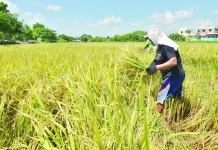
Western Visayas already has the foundations. Its gains in rice, corn, and sugarcane production show that the region is capable of sustaining its own food base. Its provinces — long considered the backbone of its economy — have proven that localized efforts can drive regional growth. But these strengths must now be harnessed more deliberately and systematically.
the region must prioritize food self-sufficiency at the local level. This means ensuring that communities can produce what they need, reducing dependence on imported or externally sourced goods that are vulnerable to disruption. Strengthening local seed systems, supporting smallholder farmers, and expanding community-based agriculture programs are essential steps.
Western Visayas must ALSO invest in shorter, more resilient supply chains. Farm-to-market roads, local trading hubs, and cooperative-based distribution systems can help ensure that food moves efficiently within the region—even when external logistics falter. The less distance food has to travel, the less exposed it is to fuel price spikes and transport interruptions.
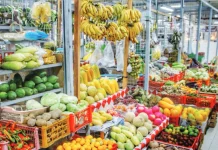
Of course, there must be a stronger push for local consumption of local produce. Encouraging households, institutions, and businesses to patronize locally grown food not only supports farmers but also stabilizes demand within the region. It keeps money circulating locally and reduces reliance on imported goods whose prices are dictated by global markets.
And yes, policymakers must recognize that self-sufficiency is not isolation — it is resilience. Western Visayas does not need to cut itself off from national or global trade. But it must build a strong internal foundation that allows it to withstand shocks when they come — and they will come.
The experience of 2025 proves that the region can recover. The warning for 2026 reminds us that recovery is not enough.
If Western Visayas continues to rely heavily on external systems — fuel markets, global supply chains, and unpredictable imports — it risks seeing its gains undone by forces it cannot control. But if it invests in strengthening its own production and consumption networks, it can transform vulnerability into stability.
In an age of global uncertainty, the most secure food system is the one that begins — and ends — at home.