

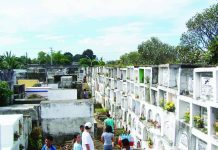


HERE WE go again! Another unsolicited proposal; another privatization move. Shades of the “unsolicited proposal” to construct a massive land reclamation project in Tagbilaran City in 2023. We never learn.
The unsolicited proposal for the “lease, rehabilitation, and operation” of the Baclayon public market is not merely a commercial development proposal. It is a direct threat to the historical, cultural, and civic identity of the town of Baclayon – the first town recorded in Bohol history, established on November 17, 1596, as documented in Horacio de la Costa’s “The Jesuits in the Philippines, 1581–1768” and the research of Erico Joseph T. Cañete, which served as the foundation for Municipal Ordinance No. 13-2005 declaring Baclayon’s official Foundation Day.
Baclayon’s historical and heritage weight
To understand why privatizing the mercado is a cultural misstep, one must consult historian Emmanuel Luis A. Romanillos. In his book, History of Bohol (1521–1937), Romanillos describes Baclayon as the first center of Christian evangelization in Bohol – a spiritual and civil hub where people from neighboring islands continually gathered. Established in 1596 by Jesuit missionaries Juan de Torres and Gabriel Sánchez, Baclayon served as the cradle from which neighboring municipalities eventually emerged.
Baclayon’s layout reflects Spanish-era urban planning, with the church, town square (plaza), municipal hall, coastal pier, and mercado forming an integrated civic center.
The Baclayon public market – characterized by its historic stone structures, coastal location, and proximity to several preserved ancestral homes and the National Cultural Treasure of the Immaculate Conception Parish – is a foundational pillar of this heritage zone. Handing over control of this space surrenders public authority over our shared memory and architectural continuity. Now tell me, why should we relinquish that?
UNESCO Global Geopark Designation
This proposal openly clashes with Bohol’s 2023 global milestone: its official designation as the Philippines’ first UNESCO Global Geopark.
Our Baclayon leaders must understand that UNESCO Global Geoparks aren’t just about hills and cave formations; they are about people, culture, and community. Being a UNESCO Geopark means protecting not just our natural landscape, but also the rich history and traditions that make Bohol unique. Baclayon, with its historic coastal town center, century-old homes, and deep-rooted history, is a vital part of what makes our island’s story so special.
Handing over our municipal market to a private enterprise for corporate redevelopment undermines the fundamental character of a UNESCO Global Geopark. UNESCO recognition demands community-led management, public stewardship, and the protection of cultural landscapes from commercial distortion. Let us not compromise the authentic heritage integrity that earns Bohol its global prestige.
Legal mandates safeguarding our heritage
Privatizing this historic landmark also ignores key provisions of Philippine heritage law:
* Republic Act No. 10066 (The National Cultural Heritage Act of 2009): Section 5 grants protection to structures at least 50 years old as presumed Important Cultural Properties. Section 15 strictly regulates the conveyance/lease of government-owned cultural assets and mandates a formal Heritage Impact Assessment (HIA) through the National Commission for Culture and the Arts (NCCA)/National Historical Commission of the Philippines before any developmental lease or site alterations can be considered.
The question is: Was an HIA done?
* Republic Act No. 7356 (NCCA Charter): Section 7 establishes the duty of both the State and its citizens to conserve Filipino historical and cultural resources. Commercializing a historic public market in a recognized heritage town defies this statutory duty.
* The 1987 Constitution: Article XIV, Section 16 states that “The State shall conserve, promote, and popularize the nation’s historical and cultural heritage and resources.” As agents of the State, local government units like Baclayon are enjoined to prioritize cultural preservation over private profit.
Public nature of the market and local governance
From a local governance lens, Section 17 of the Local Government Code of 1991 (RA 7160) designates public markets as basic services intended for the public good, providing affordable, accessible spaces for local farmers, fisherfolk, vendors, and consumers.
Privatization will inevitably increase stall rentals and restructure space allocation, creating commercial burdens that squeeze out local micro-entrepreneurs in favor of higher-paying commercial chains. When we hand a public market over to private management, profit maximization replaces civic obligation and heritage protection.
What’s the end-game?
The Baclayon mercado belongs to the people of Baclayon: Bol-anong Baclayanon. It is where our living heritage meets our daily sustenance. As part of Bohol’s UNESCO Global Geopark, we owe future generations the duty to safeguard our public sanctuaries, not surrender them.
The Sangguniang Bayan and municipal leadership must return to the drawing board, do their due diligence by revisiting the laws of the land, and reevaluate their position on this indispensable cultural asset.
History cannot be privatized.
***
The author owns and manages Belinda Communications Consulting. You can reach us via email at belca.87@gmail.com. Engage with us on X @ShilohRuthie./PN