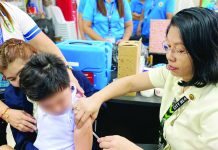



GUIMARAS – Ten individuals, including eight students, were bitten by a suspected rabid dog in Barangay Suclaran, San Lorenzo town, on August 25 and 26.
Punong Barangay Gilbert Evangelista confirmed that all victims have been discharged from the hospital and were awaiting their scheduled anti-rabies vaccinations.
The incident unfolded on August 26, when the dog entered Remedios E. Vilches–San Lorenzo National High School at around 7 a.m. and attacked seven students. It later bit another student on the street.
Prior to this, on August 25, two residents had also been bitten, bringing the total number of victims to 10.
Barangay officials said the dog was first seen wandering along the roadside before being taken in by a resident who thought it was tame. They noted the animal initially showed no signs of rabies when fed.
The dog was later captured through joint efforts of residents, the San Lorenzo Municipal Fire Station, and the Municipal Disaster Risk Reduction and Management Office. It was turned over to the Municipal Agriculture Office, where it eventually died.
In response, the Department of Agriculture (DA) in San Lorenzo announced that it will conduct a mass dog vaccination drive in Barangay Suclaran today, August 29. Barangay officials have already coordinated with the agency to gather both stray and owned dogs for inoculation.
“Animals, especially dogs, behave differently when they are sick,” said Dr. Jonic Natividad of DA Region 6.
He explained that one common sign of rabies is unusual aggressiveness, particularly among stray dogs that have been on the streets for a long time.
Natividad added that the dog’s remains were submitted for rabies testing, with results still pending from the provincial veterinarian. He noted that rabid dogs usually die within 14 to 21 days due to organ damage caused by the virus.
He emphasized that any dog involved in a biting incident is automatically considered a suspected rabies case by health authorities.
He also reminded dog owners to act responsibly by vaccinating their pets. For unvaccinated dogs, he advised keeping them leashed, confined, or outdoors to reduce risks of spreading the disease./PN