

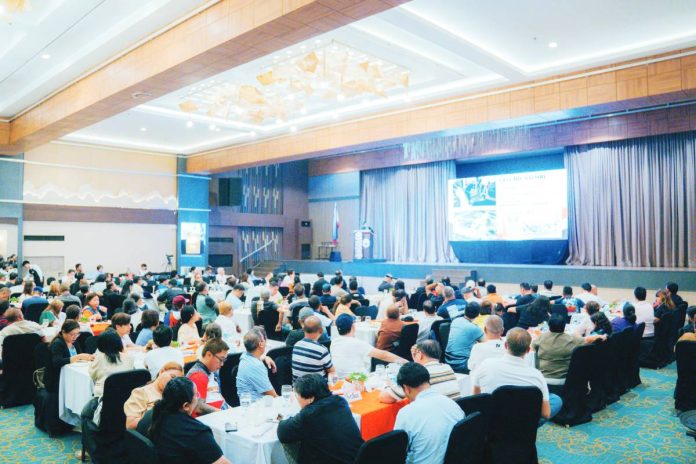
BACOLOD City — In response to public calls for transparency and stakeholder participation, the city government of Bacolod conducted a public consultation on the proposed integration of a waste-to-energy (WTE) component into its long-term waste management strategy.
The consultation held on March 17, marked a key step in shaping the city’s 10-year Solid Waste Management Plan (SWMP) for 2024–2033.
City officials emphasized that while WTE has been identified as a potential component of the plan, its implementation remains in the early stages.
Councilor Homer Bais, chair of the Sangguniang Panlungsod Committee on Environment and Ecology, clarified that the current administration is working to develop an implementable framework for the project.
“The specific technology is yet to be determined,” Bais said. “It will depend on the results of a Waste Assessment and Characterization Study (WACS).”
He added that if biodegradable waste dominates, technologies suited for biomass feedstocks may be prioritized by the Technical Working Group.
During the consultation, city officials also underscored that the local government will not directly fund the construction of WTE facilities. Instead, the project is expected to be pursued through a public-private partnership (PPP) scheme.
“The city will not commit to a fixed volume of feedstock, so it will not be locked into producing more waste to sustain WTE operations. However, it is open to transporting waste from other cities to support the facility,” Bais said.
The city also reiterated its commitment to the established waste management hierarchy—prioritizing waste prevention, reduction, reuse, recycling, and recovery before disposal.
Mayor Greg Gasataya encouraged active public participation, assuring residents that feedback gathered during consultations would inform policy decisions.
“We assure you that our ears and eyes are open to all your suggestions,” the mayor said.
The consultation followed a committee hearing on March 16 led by Bais and Councilor Wilson Gamboa, attended by environmental groups including the Negrosanon Initiative for Climate and the Environment (NICE).
The hearing was convened in response to NICE’s call for greater transparency and dialogue on the proposed WTE project.
While expressing support for inclusive discussions, the group reiterated its position that it is not opposed to WTE in principle but remains cautious about the use of thermal technologies due to potential environmental and public health risks.
NICE emphasized that waste management solutions should address the full lifecycle of waste—from reduction and reuse to recycling and composting—before resorting to disposal technologies.
City officials and council members committed to holding additional consultations and engaging technical experts to guide decision-making and ensure environmental safeguards.
NICE welcomed the March 17 consultation, describing it as a positive response to public demand for transparency, and expressed hope that future engagements would continue to prioritize evidence-based and community-centered solutions.
In January 2026, Mayor Gasataya signed a memorandum of agreement with the Department of Energy to implement WTE in Bacolod.
The proposed Bacolod Integrated Recycling and Technology Hub (BIRTH Ecopark) will be constructed on a 25.7-hectare site in Barangay Felisa, adjacent to the existing 5-hectare sanitary landfill.
Earlier, the city council approved the “Bacolod Integrated Recycling and Technology Hub (BIRTH) Declaration and WTE Industrial Zone Lease or Public-Private Partnership (PPP) Enabling Ordinance of 2026,” which seeks to formally recognize BIRTH as the city’s central solid waste management facility and pave the way for a potential WTE industrial zone within the site./PN