



THE FUTURE of dentistry in the Philippines holds great promise.
As the profession and industry respond to technological advances, patient expectations are shifting, and healthcare dynamics are evolving.
While challenges persist, opportunities abound for an oral-health landscape that is more accessible, preventive, and digitally driven.
One of the key drivers is technology and digital dentistry. Institutions such as University of the Philippines College of Dentistry (UPCD) have inaugurated state-of-the-art digital dental laboratories equipped with intra-oral scanners, 3D printers and milling machines, marking a first in Philippine dental education.
The adoption of technologies like 3D imaging (e.g., CBCT) is likewise accelerating: one study projects the Philippines’ CBCT dentistry market growing at about 15.1% Compound Annual Growth Rate (CAGR) from 2025 to 2031.
(The CAGR measures an investment’s annual growth rate over a period of time, assuming profits are reinvested at the end of each year.)
These tools will enable more accurate diagnostics, minimally invasive treatments and custom-made restorations — a shift from traditional analog methods to efficient digital workflows.
At the same time, the dental services market in the Philippines is expanding. Reports indicate the dental services market may grow to about US$1.7 billion by mid-2020s, fueled by rising awareness, urbanization, private clinic expansion and dental tourism.
The dental consumables market also projects 8.15 % CAGR through 2030, indicating increased consumption of advanced materials and equipment.
This growth suggests dentistry will play an increasingly important role in the Philippine health economy, and that investments in clinics and infrastructure will rise.
However, there are significant challenges to overcome. Oral disease remains a major burden: despite recognition by institutions that “there is no health without oral health,” many Filipinos only seek dental care when pain becomes acute.
The dentist-to-population ratio still lags behind the ideal: figures suggest about 1 dentist for about 53,000 people.
That means rural and remote areas are underserved. Further, cost, awareness and accessibility remain high hurdles for preventive care and early intervention.
Given these forces, the future of dentistry in the Philippines will likely evolve around several themes:
1. Preventive and community-based care. Instead of waiting for treatment, the model will shift toward prevention — community screenings, school-based programs, and earlier intervention of caries and periodontal disease. Dental professionals will increasingly serve as wellness partners, not just clinicians for repair.
2. Digital and personalized dentistry. With digital scanners, CAD/CAM, AI-enabled diagnostics and biomaterials, treatments will become faster, more precise and tailored to each patient’s needs. The Philippines appears ready to adopt these tools, as shown in educational and market trends.
3. Geographic expansion and access equity. Urban and affluent areas will continue to adopt advanced dentistry, but the real test is how remote, underserved communities will be reached. Mobile clinics, teledentistry, shared imaging centers, and public-private partnerships may help bridge the gap.
4. Growth of dental tourism and elective aesthetic demand. Rising middle-class incomes and aesthetic awareness are driving demand for cosmetic dentistry and orthodontics. The Philippines may see more inbound or regional dental tourism as standards, accreditation and digital workflow improve.
5. Skill development and profession evolution. Dental education in the Philippines is striving for excellence — UPCD’s recent licensure achievements and focus on new technologies are good examples.
Dentists will need continuous training in digital tools, biomaterials and preventive strategies.
The future of dentistry in the Philippines is poised between challenge and opportunity.
If the profession can embrace technology, broaden access, emphasize prevention and link oral health into general health, then dentistry will not only repair smiles but promote lifelong wellness. Particularly, the next decade could see a transformation from reactive care to anticipatory, digital and patient-centered dental health for Filipinos across urban and rural settings.
***
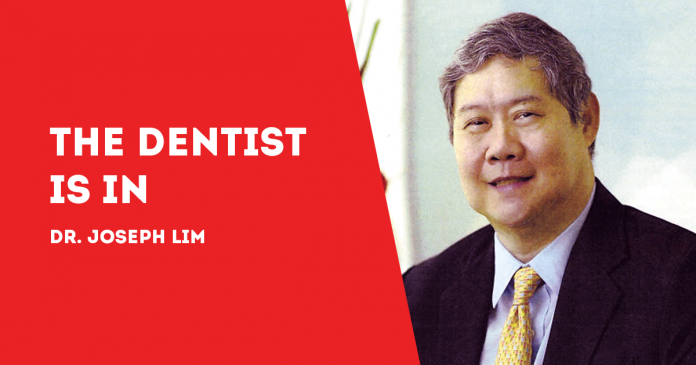
Dr. Joseph D. Lim, Ed. D., is the former Associate Dean of the College of Dentistry, University of the East; former Dean, College of Dentistry, National University; Past President and Honorary Fellow of the Asian Oral Implant Academy; Honorary Fellow of the Japan College of Oral Implantologists; Honorary Life Member of the Thai Association of Dental Implantology; and Founding Chairman of the Philippine College of Oral Implantologists. For questions on dental health, e-mail jdlim2008@gmail.com or text 0917-8591515.
***
Dr. Kenneth Lester Lim, BS-MMG, DDM, MSc-OI, graduated Doctor of Dental Medicine, University of the Philippines, College of Dentistry, Manila, 2011; Bachelor of Science in Marketing Management, De la Salle University, Manila, 2002; and Master of Science (MSc.) in Oral Implantology, Goethe University, Frankfurt, Germany, 2019. He is an Associate Professor; Fellow, International Congress of Oral Implantologists; and Fellow, Philippine College of Oral Implantologists. For questions on dental health, e-mail limdentalcenter@gmail.com/PN