

THERE was a time when a one-peso fuel hike could already send transport and progressive groups to the streets — whistles, placards, radio voices full of urgency. Many Boomers and Gen Xers remember that.
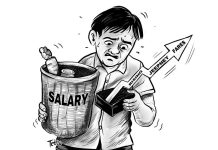
Today, diesel has crossed P100 in some areas, gasoline is also on its way, and the reaction feels different. Not calmer — just more tired. People still complain — in jeepneys, faculty rooms, sari-sari stores, and social media chats filled with pump prices — but there is also a quiet resignation, as if rising costs have become something we simply absorb.
And this week’s spike was no small bump. The Department of Energy projected increases from P12.90 to P16.60 per liter for gasoline and P20.40 to P23.90 for diesel. Some diesel prices have already gone past ₱110, threatening to double the February 2026 level price. That is not routine anymore. That is a real hit on everyday budgets.
For teachers, this is not an abstract energy issue. It shows up in small, daily decisions. A tricycle fare goes up before payday. A teacher in Miag-ao or Sara brings packed lunch all week because transport already took the food budget. A guidance counselor postpones a home visit because fuel now feels expensive.
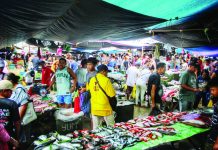
Even nearby, the canteen trims portions, the photocopy shop adds a few pesos, and the fish vendor quietly explains why prices climbed. Economists call it inflation, but people feel it without needing graphs. Political scientist Rogelio Alicor Panao and IBON Foundation note that transport shocks spread quickly across prices, while the peso’s buying power keeps weakening. Wages, meanwhile, barely move.
The harder truth is that relief is not coming soon. The country imports almost all its oil, and disruptions in the Strait of Hormuz — through which about a fifth of global supply passes — quickly reach us. Reuters reports crude rising past $100 per barrel, with Southeast Asia scrambling to respond.
China’s fuel export ban adds more pressure. The future does not look like a quick recovery. It looks like a long stretch of uncertainty. This is what unsettles people — not just the rising costs, but the sense that the road ahead stays rough.
The trouble with the official response is that it looks like crisis management, not foresight. Subsidies, staggered hikes, shorter workweeks, and possible tax suspension may buy time, and for some families, that matters. But they are still short-term fixes. They do not solve the bigger weakness: we remain too exposed to imported oil, too thin in reserves, and too slow in preparing before trouble arrives.
That is also why the bicycle-and-carpool advice rubbed many people the wrong way. In theory, it sounds practical. On our roads, it can sound almost unserious. Not everyone has safe bike lanes, matching schedules, nearby coworkers, or the luxury of a simple commute.
Detached advice is not always wrong. It just sounds hollow when it forgets the road people actually travel.
Still, the bigger issue is not one awkward sound bite. It is the policy beneath it. The Downstream Oil Industry Deregulation Act of 1998 (RA 8479) promised competition and protection. But moments like this make people ask: protected by whom? (To be continued)/PN