
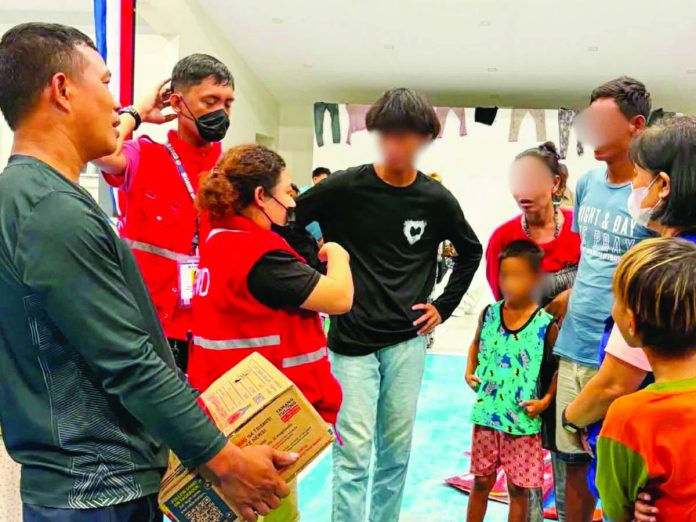
ILOILO — Twenty-eight members of the Badjao indigenous people, including 11 children, narrowly escaped death after raging floodwaters triggered by the southwest monsoon trapped them beneath Tumagbok Bridge in Miag-ao town before dawn on July 11, prompting a high-risk multi-agency rescue operation followed by immediate humanitarian assistance from the Department of Social Welfare and Development (DSWD).
The rescued group, composed of 17 adults and 11 children, had been stranded beneath the bridge after rapidly rising floodwaters cut off all escape routes.
Authorities launched the rescue operation between 12 a.m. and 1 a.m. following reports that the families were trapped in the middle of the river beneath the bridge.
The Badjaos are an indigenous seafaring ethnic group from Mindanao who often migrate to Panay Island to escape armed conflict and poverty. In urban areas, they are heavily marginalized and frequently resort to street begging. Local government units (LGUs) in Western Visayas regularly rescue and repatriate them while enforcing strict anti-mendicancy laws.
In Iloilo City, Badjao communities and panhandlers are frequently monitored under bridge structures and vacant lots in districts like Jaro and La Paz and the nearby town of Pavia, Iloilo, among other areas. Similar groups move across the region, including Bacolod City in Negros Occidental.
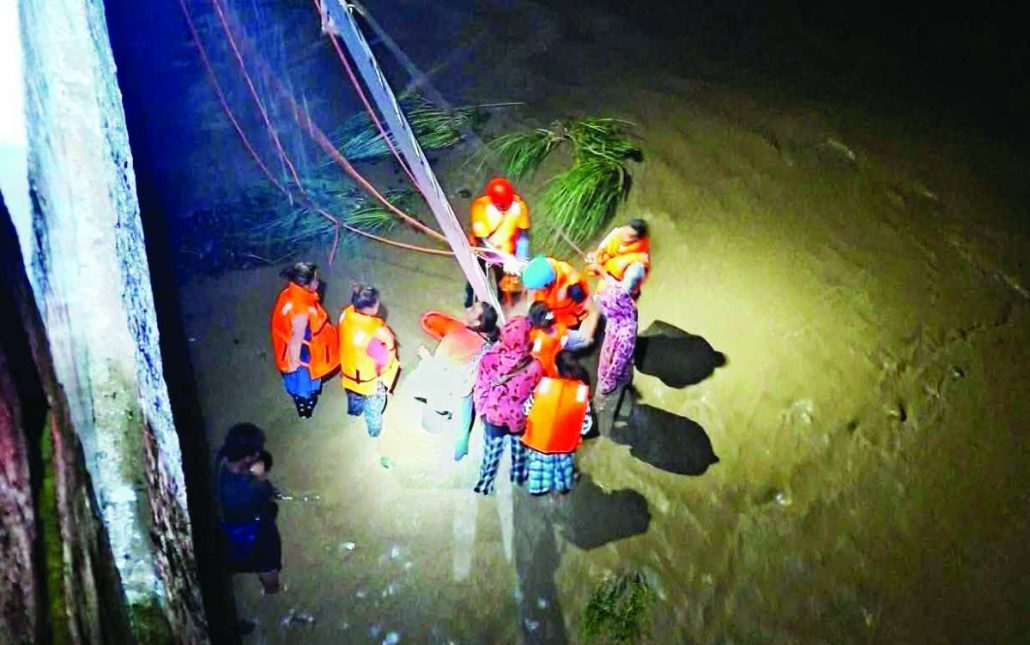
Mayor Richard Garin of Miag-ao said rescuers faced dangerous conditions as floodwaters continued to rise during the operation.
“The rescue operation was difficult because the water kept rising on both sides. Thanks to the coordinated efforts of all responding agencies, we were able to rescue everyone safely without any injuries,” Garin said.
The operation involved personnel from the Municipal Disaster Risk Reduction and Management Office (MDRRMO), Philippine National Police, Bureau of Fire Protection, Philippine Coast Guard, and the Philippine Army, whose coordinated response ensured that all 28 victims were safely evacuated.
Garin said several of the rescued children were already shivering after prolonged exposure to heavy rain and floodwaters.
“After they were rescued, we immediately brought them to the First Aid Clinic for medical assessment before transferring them to the Regional Evacuation Center, where they were provided food, clothing, and other humanitarian assistance,” he said.
Following the rescue, the DSWD Region 6 deployed its Quick Response Team, which distributed Family Food Packs and Sleeping Kits to the displaced families while also providing psychosocial support to help them recover from the traumatic experience. The agency said the intervention forms part of its continuing assistance for internally displaced persons.
The DSWD said it continues to monitor the condition of the rescued families through its PAGABOT program and remains ready to provide additional interventions as needed, in line with the directives of President Ferdinand R. Marcos Jr. and DSWD Secretary Rex Gatchalian.
Garin said he was surprised to discover that the Badjao families had been living beneath the bridge for about a month before the flooding, with their number gradually increasing over time.
While the families remain temporarily sheltered at the Regional Evacuation Center, the municipal government is coordinating with the Philippine Ports Authority and other concerned agencies to facilitate their return to Zamboanga.
“We will help them return to their home in Zamboanga. While they are staying in our evacuation center, we will ensure that all their humanitarian needs are provided until they can safely return to their families,” Garin added./PN