

[av_one_full first min_height=” vertical_alignment=” space=” custom_margin=” margin=’0px’ padding=’0px’ border=” border_color=” radius=’0px’ background_color=” src=” background_position=’top left’ background_repeat=’no-repeat’ animation=”]
[av_heading heading=’Councilor mulls FOI ordinance’ tag=’h3′ style=’blockquote modern-quote’ size=” subheading_active=’subheading_below’ subheading_size=’15’ padding=’10’ color=” custom_font=”][/av_heading]
[av_textblock size=” font_color=’custom’ color=”]
Thursday, April 13, 2017
[/av_textblock]
[av_textblock size=” font_color=” color=”]
ILOILO City – Guidelines that will operationalize freedom of information (FOI) in the city government are being pushed.
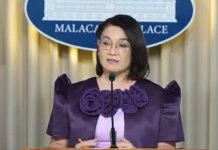
Councilor Lady Julie Grace Baronda is preparing a proposed ordinance that will set the guidelines. She will submit it for calendar in next week’s regular session of the Sangguniang Panlungsod (SP).
“We aim to promote transparency of public records. They must be within easy access of people,” she said.
The guideline will set how records will be accessed and the limitations of their release.
Baronda said the guidelines will also be aligned with the implementation of the FOI in the Executive branch of the national government to ensure its smooth execution.
While the proposal is yet to pass public consultation, Baronda hoped it will be approved next month.
On July 2, 2016 President Rodrigo Roa Duterte signed Executive Order No. 2 that guarantees access to information in the Executive branch of the government. This covered but is not limited to national government and all its offices, departments, bureaus, offices and instrumentalities, including government-owned or –controlled corporations and state universities and colleges.
Local government units (LGUs) are also encouraged “to observe and be guided” by the EO.
The EO, titled “Operationalizing in the Executive Branch the People’s Constitutional Right to Information and the State Policies of Full Public Disclosure and Transparency in the Public Service and Providing Guidelines Therefor,” said it was consistent with the Constitution.
“Every Filipino shall have access to information, official records, public records, and to documents and papers pertaining to official acts, transactions or decisions, as well as to government research data used as basis for public-development,” according to the directive.
Under the EO, information would refer to “any records, documents, papers, reports, letters, contracts, minutes and transcripts of official meetings, maps, books, photographs, data, research materials, films, sound and video recording, magnetic or other tapes, electronic data, computer stored data, or other like or similar data or materials recorded, stored or archived in whatever format.”
However, requests would be denied regarding information that “falls under any of the exceptions enshrined in the Constitution, existing law or jurisprudence.”
The President instructed every agency in the executive branch to “formulate their respective implementing details” 120 days after the effectivity of the FOI order. (PNA)
[/av_textblock]
[/av_one_full]