

THE DEPARTMENT of Energy (DOE) may again shift to the implementation of fixed price adjustment next week if oil prices continue to be volatile.
“Next week, if things are still volatile, wala na po ‘yung range, kundi ‘yung definite amount na lang na (there will be no range, but just the definite amount, which is) maximum or minimum, whether its rollback or oil price hike,” Energy Secretary Sharon Garin said at a virtual briefing on Monday, July 13.
Garin said renewed geopolitical tensions in the Middle East raised concerns anew over global oil supply disruptions.
“The recent days, there are still growing tensions in the region. In particular, threat to navigation through the Strait of Hormuz have underscored the vulnerability of one of the world’s most critical energy trade corridors, placing upward pressure on international crude oil prices and consequently, our domestic pump prices are affected so expect a slight increase in our prices,” she said.
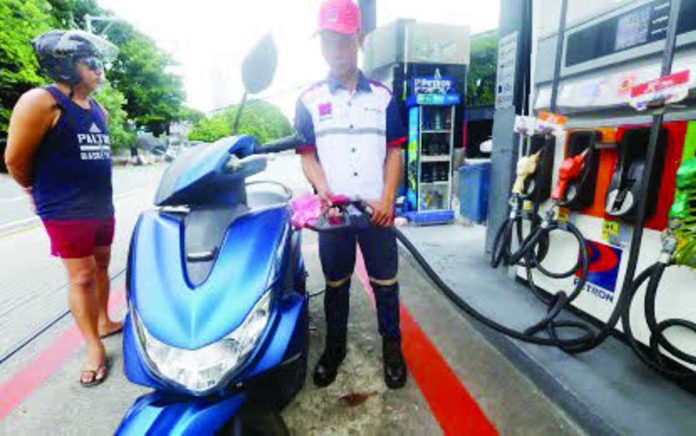
Based on DOE data, gasoline prices rose or decreased by P1 per liter beginning Tuesday.
For diesel, motorists expected an increase of P2.62 to P4.62 per liter, while kerosene prices went up by P2.22 to P4.22 per liter.
The DOE, however, assured that the country has enough supply.
The country currently has an average of 47.87 days’ worth of fuel supply as of July 10.
Breakdown figures show gasoline stocks will last 48.17 days; diesel, 45.69 days; kerosene, 148.98 days; jet fuel, 80.09 days; fuel oil, 33.37 days; and liquefied petroleum gas, 39.51 days.
“As these global developments continue to unfold, the DOE remains vigilant and steadfast in implementing measures to safeguard the country’s energy security, mitigate impacts on consumers, and ensure a stable and reliable fuel supply,” Garin said.
To help cushion the impact of rising petroleum prices, the government earlier implemented a fuel subsidy program.
DOE director Rino Abad said that as of July 13, the government has disbursed P267.7 million in subsidies, benefiting 83,381 recipients.
Data from the DOE show that 2,723 gasoline stations nationwide are participating in the program. (PNA)