
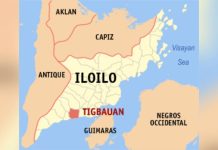



ONLY ONE barangay in Iloilo Province reportedly remains undeclared as drug-cleared. On paper, that statistic reads like a triumph. It suggests a near-total victory in the long and complicated campaign against illegal drugs. It implies that the grassroots — the very foundation of governance — has been fortified against the scourge.
And yet, reality has intruded.
Three barangay captains have been arrested in separate buy-bust operations, each allegedly caught with substantial volumes of shabu worth millions of pesos. These arrests involve elected village chiefs — frontline leaders who are supposed to be guardians of peace and order in their communities.
If almost all barangays are declared drug-cleared, how did three of their top officials end up in police operations?
This is not merely embarrassing. It calls into question the credibility of the drug-clearing system itself.
The current framework for declaring barangays drug-cleared was last set in 2017. Nearly a decade later, is it still responsive to the evolving realities of drug trafficking? Criminal operations have become more adaptive, more discreet, more sophisticated. Have our standards kept pace — or have they remained static while the problem morphed?
Being drug-cleared should mean more than compliance with a checklist. There should be rigorous intelligence validation, sustained community monitoring, and unquestionable leadership integrity. If village chiefs themselves are under surveillance or implicated in illegal drugs, then the declaration becomes hollow — ceremonial rather than substantive.
There is also the uncomfortable possibility that standards may have become too lenient, or that validation mechanisms rely too heavily on documentation rather than deep intelligence cross-checking. A barangay can comply administratively — submit reports, hold meetings, establish committees — while vulnerabilities remain beneath the surface. Drug-cleared on paper does not automatically mean drug-free in practice.
This is not an argument against the anti-drug campaign. On the contrary, it is a call to strengthen it.
The review of the 2017 framework must be honest and unsparing. Intelligence reports from law enforcement should be systematically integrated into drug-clearing assessments. Random audits and cross-validation should be institutionalized. Monitoring must extend beyond community users to include those in positions of authority.
Most importantly, accountability must be uncompromising. Public office should carry aggravated responsibility. When a barangay captain falls in a buy-bust operation, the damage goes beyond legal violation — it corrodes public trust and undermines the moral authority of government at its most immediate level.
If nearly every barangay is drug-cleared, then the system must be strong enough to ensure that its leaders are beyond reproach. Otherwise, we risk celebrating statistical victories while losing the deeper war for integrity.
The arrests of three captains are not warning signals. The question now is whether Iloilo will treat them as isolated incidents — or as proof that it is time to tighten the standards, sharpen intelligence coordination, and ensure that “drug-cleared” reflects reality, not merely paperwork.
A declaration must mean something. Otherwise, it is just ink on a certificate.