



THE GLOBAL phase-out of dental amalgam has been extended from 2030 to 2034.
A landmark decision was reached at the Sixth Conference of the Parties (COP6) to the Minamata Convention on Mercury last November 7 in Geneva to set 2034 as the global phaseout date after which the manufacture, import, or export of dental amalgam will no longer be permitted.
The milestone marks a major win for oral and public health and underscores the power of unified, science-based advocacy led by the World Dental Federation (FDI) and the International Association for Dental, Oral, and Craniofacial Research (IADR).
The FDI represents more than one million dentists worldwide. Its membership includes some 200 national dental associations and specialist groups in over 130 countries, including the Philippine Dental Association.
The IADR is a nonprofit organization promoting dental, oral, and craniofacial research for health and well-being. It represents the individual scientists, clinician-scientists, dental professionals, and students based in academic, government, non-profit, and private institutions.
In 2020, the Department of Health (DOH) released guidelines on the phase-out of mercury use in dental restorative procedures.
The DOH Administrative Order provides a comprehensive policy in the elimination of dental amalgam in the country and sets guidelines governing the importation, manufacture, distribution and sale of dental amalgam. It establishes health and safety guidelines in the handling, use, storage and disposal of dental amalgams among dental workers and students, and patients.
It also encourages awareness on alternative dental restorative materials and identify several measures to strengthen the advocacy on oral health and the prevention of tooth decay.
The use of dental amalgam as a filling material to treat dental decay will no longer be allowed after the phase-out period of three years after the order takes effect.
The use of the material as a dental filling for children 14 years old and below, pregnant women and breastfeeding mothers is not allowed. The importation of liquid mercury is banned.
Dental amalgam is one of the most versatile restorative materials used in the field of dentistry. It constitutes approximately 75 percent of all restorative materials used by dentists and has been used as a dental material for more than 150 years.
Dental amalgam is a mixture of metals consisting of a silver-tin-copper alloy and liquid (elemental mercury). Amalgam has a mercury-alloy ratio specific to each product but generally less than 1:1 so that amalgam contains 43 percent to 50 percent mercury. It releases low levels of mercury in the form of a vapor that can be inhaled and absorbed by the lungs. High levels of mercury vapor exposure are associated with adverse effects in the brain and the kidneys.
The concerted efforts of the FDI and the IADR helped ensure that the final phase-out timeline was extended beyond 2030, the date originally proposed to 2034.
The decision gives countries nine years to adapt their national strategies and healthcare systems to the new framework.
It aligns closely with the FDI and IADR’s long-standing position advocating for a coordinated and equity-focused phase-down that allows all countries, especially low- and middle-income nations, to strengthen capacity, build technical expertise, and ensure continuity of patient care during the transition.
“Science and evidence must remain at the heart of every global health policy decision,” said Dr. Christopher Fox, Chief Executive Officer of IADR.
“This outcome reflects the progress we’ve made by investing in research into mercury-free alternatives, as called for in the text of the Minamata Convention. IADR remains committed to supporting continued innovation and research that will further the rapid improvement of affordable, effective, and sustainable restorative materials, so no one is left behind in this transition.”
The final decision includes a key exemption that supports the joint advocacy by FDI and IADR which ensures that even after phase-out of dental amalgam it can be used “when its use is considered necessary by the dental practitioner based on the needs of the patient.”
This provision ensures that patient care remains at the center of decision-making, safeguarding access to essential restorative treatments where alternatives are not yet available or viable, the FDI and IADR said in a joint statement.
The decision is supported by the International Dental Manufacturers Association (IDM) and the American Dental Association (ADA).
“Coordinated advocacy efforts emphasized that while accelerating the phase down and eventually phasing out dental amalgam is essential, it must be achieved through an evidence-based, patient-centered, and equitable transition that is fair to all countries and considers their specific challenges and capacities,” the statement said.
“As we move toward the eventual phase-out of dental amalgam, it is essential that the needs of our members, and the patients they serve, remain at the heart of every decision,” said Enzo Bondioni, FDI Executive Director. “This outcome provides much-needed time and clarity for our members to plan, prepare, and implement the necessary national policies.”
It reinforces FDI’s commitment to supporting the global dental community in maintaining continuity of care and advancing oral health equity during what Bondioni called an “important transition.”
The dental organizations called for research into affordable, effective, and sustainable alternative materials and emphasized that waste management should be compulsory to reinforce the Convention’s broader objective of reducing environmental mercury exposure.
The Minamata Convention on Mercury, which entered into force in August 2017, now counts 153 Parties as of September 2025. The Seventh Conference of the Parties (COP7) will take place in June 2027, coinciding with the tenth anniversary of the Convention.
***
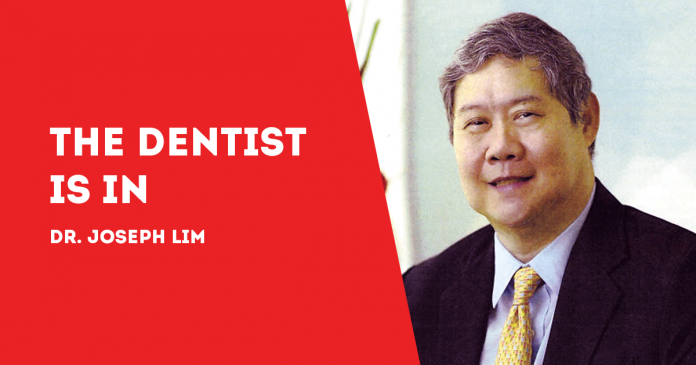
Dr. Joseph D. Lim, Ed. D., is the former Associate Dean of the College of Dentistry, University of the East; former Dean, College of Dentistry, National University; Past President and Honorary Fellow of the Asian Oral Implant Academy; Honorary Fellow of the Japan College of Oral Implantologists; Honorary Life Member of the Thai Association of Dental Implantology; and Founding Chairman of the Philippine College of Oral Implantologists. For questions on dental health, e-mail jdlim2008@gmail.com or text 0917-8591515.
***
Dr. Kenneth Lester Lim, BS-MMG, DDM, MSc-OI, graduated Doctor of Dental Medicine, University of the Philippines, College of Dentistry, Manila, 2011; Bachelor of Science in Marketing Management, De la Salle University, Manila, 2002; and Master of Science (MSc.) in Oral Implantology, Goethe University, Frankfurt, Germany, 2019. He is an Associate Professor; Fellow, International Congress of Oral Implantologists; and Fellow, Philippine College of Oral Implantologists. For questions on dental health, e-mail limdentalcenter@gmail.com./PN