



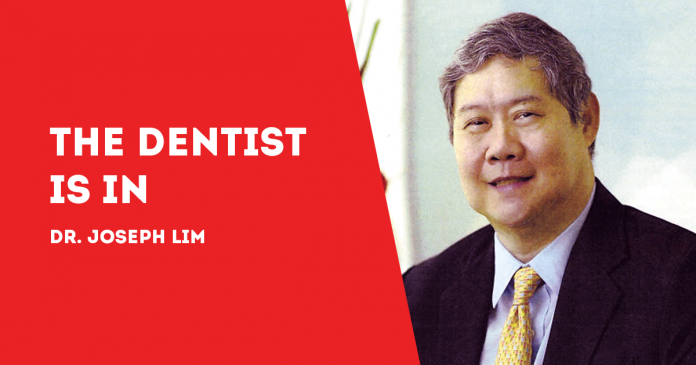
(By Dr. Joseph D. Lim and Dr. Kenneth Lester Lim, BS-MMG, DDM, MSc-OI)
MORE THAN 70 million Filipinos have tooth decay. That’s half of our population.
The number comes from the Department of Health reflecting a World Health Organization (WHO) pronouncement that 3.5 billion people or almost half of the world’s population suffer from oral diseases. Three out of every four of these people live in poor countries.
The numbers don’t come out of nowhere. They are from WHO’s Global Oral Health Status Report, the first-ever comprehensive picture of oral disease burden in 194 countries, including the Philippines.
The WHO report says the global burden of oral diseases have increased by 1 billion over the last 30 years, “a clear indication that many people do not have access to prevention and treatment of oral diseases.”
“Oral health has long been neglected in global health, but many oral diseases can be prevented and treated,” said WHO Director-General, Dr Tedros Adhanom Ghebreyesus.
According to the WHO, the most common oral diseases are dental caries (tooth decay), severe gum disease, tooth loss and oral cancers.
Untreated dental caries is the single most common condition globally, affecting an estimated 2.5 billion people. Severe gum disease – a major cause of total tooth loss – is estimated to affect 1 billion people worldwide. About 380,000 new cases of oral cancers are diagnosed every year.
The WHO report underscores glaring inequalities. Oral diseases affect the most vulnerable and disadvantaged, people on low incomes, people living with disabilities, older people living alone or in care homes, those living in remote and rural communities and people from minority groups.
“This pattern of inequalities is similar to other noncommunicable diseases such as cancers, cardiovascular diseases, diabetes, and mental disorders,” the WHO study declares. “Risk factors common to noncommunicable diseases such as high sugar intake, all forms of tobacco use, and harmful use of alcohol all contribute to the global oral health crisis,” the United Nations health agency says.
Only a small percentage of the global population is covered by essential oral health services, and those with the greatest need often have the least access to services.
One of the key barriers is that oral health care requires high out-of-pocket expenditures. This often leads to catastrophic costs and significant financial burden for families and communities.
The provision of oral health services also relies on highly specialized providers using expensive high-tech equipment and materials, and these services are not well integrated with primary health care models.
Poor information and surveillance systems, combined with low priority for public oral health research are major bottlenecks to developing more effective oral health interventions and policies.
There are opportunities to improve global oral health, for example, by promoting a well-balanced diet low in sugars, stopping use of all forms of tobacco, reducing alcohol consumption and improving access to effective and affordable fluoride toothpaste.
Planning oral health services should be a part of national health and improving integration of oral health services in primary health care as part of universal health coverage.
In 2022, the World Health Assembly adopted a global strategy on oral health with a vision of universal health coverage for oral health for all individuals and communities by 2030. A detailed action plan is now under development to help countries translate the global strategy into practice.
***
Dr. Joseph D. Lim, Ed. D., is the former Associate Dean of the College of Dentistry, University of the East; former Dean, College of Dentistry, National University; Past President and Honorary Fellow of the Asian Oral Implant Academy; Honorary Fellow of the Japan College of Oral Implantologists; Honorary Life Member of the Thai Association of Dental Implantology; and Founding Chairman of the Philippine College of Oral Implantologists. For questions on dental health, e-mail jdlim2008@gmail.com or text 0917-8591515.
***
Dr. Kenneth Lester Lim, BS-MMG, DDM, MSc-OI, graduated Doctor of Dental Medicine, University of the Philippines, College of Dentistry, Manila, 2011; Bachelor of Science in Marketing Management, De la Salle University, Manila, 2002; and Master of Science (MSc.) in Oral Implantology, Goethe University, Frankfurt, Germany, 2019. He is an Associate Professor; Fellow, International Congress of Oral Implantologists; and Fellow, Philippine College of Oral Implantologists. For questions on dental health, e-mail limdentalcenter@gmail.com/PN