



GETTING sick on an isolated island can mean facing more than an illness. It can mean finding a boat, enduring a long journey across the sea, and paying for transportation on top of medical expenses—all before treatment can even begin.
For residents of Semirara Island, geographic isolation adds another challenge to accessing healthcare. When medical facilities are far beyond the shoreline, even routine consultations can become costly and difficult to arrange. In emergencies, the distance can make an already stressful situation even more daunting.
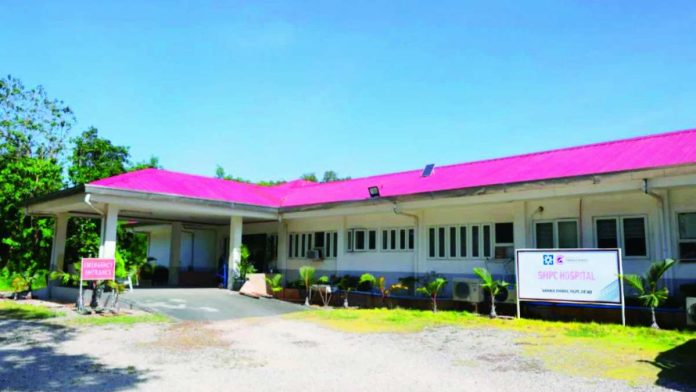
Over the years, however, the island’s development has brought essential medical services closer to home. In 2013, the island would have its first PhilHealth-accredited facility, the SMPC Infirmary. Recognizing healthcare as a basic community need, Semirara Mining and Power Corporation (SMPC) invested in medical infrastructure to help address the island’s longstanding challenges in accessing essential services, with the infirmary as the center of these efforts.

In time, public health services have become more accessible, and medical missions have extended care to communities that remain difficult to reach. Today, residents have more options for seeking medical attention without immediately having to leave the island.
Bringing Healthcare Closer to Home
The 15-bed SMPC Infirmary is the only Department of Health (DOH)-licensed health facility on Semirara Island. While it primarily serves SMPC employees and their dependents, it is also open to other island residents. Its services include regular health checkups, laboratory tests, and X-ray imaging, complemented by specialized medical services in dentistry, internal medicine, and obstetrics, among others.
The infirmary is also part of the government’s Yaman ng Kalusugan (YAKAP) program, PhilHealth’s primary-care initiative that promotes access to preventive and essential healthcare. Through the program, eligible beneficiaries can access primary-care consultations, laboratory and diagnostic services, essential medicines, and preventive care. Its inclusion in YAKAP further connects Semirara residents to the country’s broader healthcare system, helping make essential services more accessible within their own community.
Since 2016, the SMPC Infirmary has recorded more than 295,000 patient visits, reflecting its sustained role in meeting the healthcare needs of the island community. By providing medical services on the island, the infirmary gives residents another option for seeking care locally, potentially reducing the need to travel elsewhere for certain consultations, tests, and treatments.
Extending Care Beyond the Infirmary
Having a medical facility on the island is a significant step, but it does not eliminate every barrier to care. Residents in far-flung communities on Semirara and neighboring islands may still face considerable difficulty reaching the infirmary, whether because of distance, transportation constraints, or the cost of travel.
To help bridge this gap, SMPC conducts regular medical missions that bring free healthcare services directly to underserved communities. Rather than requiring residents to travel to a medical facility, these initiatives bring healthcare professionals and essential services closer to the people who need them.
SMPC works with local government units, health workers, and private medical institutions to organize the missions. Depending on the community’s needs, services may include free medical consultations, dental care, eye examinations, medicines, and health education. Doctors also perform minor procedures, while some missions offer additional assistance, such as free eyeglasses and haircuts.
These outreach activities form a key part of SMPC’s community programs. Major medical missions are conducted quarterly, complemented by more targeted initiatives throughout the year. Some focus on raising awareness and providing screening for sexually transmitted infections, while others prioritize women’s health and offer free diagnostic services.
The impact is reflected in the number of residents reached. In the first half of 2026 alone, SMPC conducted five medical missions on Semirara Island, benefiting more than 1,000 people. Since 2023, its medical missions have served more than 10,000 residents of Semirara and other nearby islands in the Municipality of Caluya.
For families managing tight household budgets, these services can make a meaningful difference. A free tooth extraction, cyst removal, or circumcision can spare a family the added expense of traveling elsewhere for treatment and paying for a procedure at a hospital or clinic. For residents in remote communities, the benefit goes beyond the immediate cost savings: it means receiving care that might otherwise be delayed or remain out of reach.
By bringing medical services directly to communities, the missions help address not only the cost of healthcare but also the distance that can prevent people from seeking it in the first place.
Healthcare as a Measure of Progress
The progress of Semirara Island is visible in its paved roads, improved infrastructure, and brightly lit public spaces. But development is also measured in less visible ways: in the availability of medical care, the ability to consult a doctor without crossing the sea, and the reassurance of knowing that help is closer when illness strikes.
Through the SMPC Infirmary, access to PhilHealth services under YAKAP, and regular medical missions that reach underserved communities, Semirara has expanded the healthcare options available to its residents. Together, these efforts help reduce the barriers of distance and cost that have long complicated access to essential medical services.
For a parent seeking a checkup for a child, an older resident managing a chronic condition, or a worker who needs medical attention, access to care can mean one less journey to plan, one less expense to shoulder, and one less reason to postpone treatment.
On an island where the sea has long stood between residents and essential services, bringing healthcare closer to home is a tangible improvement in everyday life, and a reminder that progress matters most when people can feel its benefits./PN