


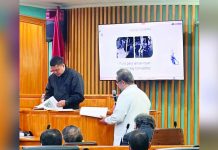

THE RECENT impeachment proceedings involving President Marcos have brought renewed public attention not only to politics but also to an important legal concept: hearsay. News reports noted that some members of the impeachment committee expressed concern that certain testimonies were hearsay. “Hearsay” is a term many have heard but few fully understand. In the context of legal proceedings, whether in court or in legislative inquiries, it is worth explaining what hearsay is, why it matters, and how it is treated under Philippine law.
In simple terms, hearsay refers to an out-of-court statement offered to prove the truth of the matter asserted. In legal proceedings, this means that if Person A testifies that Person B said something, and that testimony is presented to prove that the content of Person B’s statement is true, it is generally considered hearsay. The concern with hearsay arises because the person who originally made the statement is not there to be cross-examined, raising questions about reliability and accuracy.
Under the Philippine Rules of Court, hearsay is generally inadmissible as evidence in trial courts unless it falls under one of several recognized exceptions. These exceptions include spontaneous declarations, statements against interest, dying declarations, and records required by law, among others. The rationale is clear: when the declarant is unavailable or the statement is made under circumstances that suggest trustworthiness, it may be accepted as an exception to the rule.
However, it is also important to recognize that the rules governing hearsay are procedural rules applicable primarily in judicial trials. Legislative bodies – such as the House of Representatives conducting an impeachment hearing – are not strictly bound by the Rules of Court. Inquiries conducted by Congress, the Senate, or special commissions often allow a broader range of testimony and documents for the purpose of fact-finding. The question in such settings is not strictly whether evidence is legally admissible, but whether it is helpful, relevant, and credible to the inquiry at hand.
This does not mean that hearsay should be accepted without scrutiny. Rather, it highlights a practical distinction: legislative bodies are tasked with uncovering information that may eventually inform legal proceedings or public decisions, and in doing so, they rely on a different standard than courts.
In the impeachment context, committee members’ hesitancy toward hearsay reflects a concern for fairness and reliability. They appear mindful that unverified statements should not be treated as indisputable fact. At the same time, total exclusion of hearsay could hamper the committee’s ability to compile a full picture of events, especially when direct evidence is difficult to secure.
The challenge, therefore, is balance. Investigative bodies like impeachment panels must weigh the usefulness of hearsay against the need for credible substantiation. They must discern between mere gossip and statements that, while technically hearsay, may point toward avenues for further verification.
Ultimately, understanding hearsay helps the public appreciate the complexity of fact-finding in governance and the interplay between law, evidence, and democratic accountability. In a society that values both justice and transparency, that understanding is itself a kind of civic education./PN