


Who’s in Charge of Rescue Anyway?
Under the law, the National Disaster Risk Reduction and Management Council (NDRRMC) is the overall coordinating body for disaster and rescue operations. It sits under the Department of National Defense (DND) and mobilizes agencies such as the PNP, BFP, Coast Guard, Armed Forces, and the Philippine Red Cross.
But in actual emergencies, the first responders are always the local ones—the barangay volunteers, the local police, and fire brigades. Republic Act No. 10121 (the Philippine DRRM Act of 2010) mandates that every barangay, city, and province must have its own DRRM Council. These councils lead evacuation, search and rescue, and coordination with national agencies.
In other words, the barangay is the first line of defense, and the national government only comes in when the scale of the disaster exceeds local capacity.
So Should the Police Lead Local Rescues?
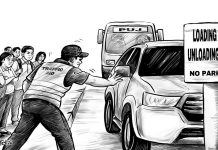
If we think of it pragmatically, yes—the police are often the first on scene. They already have vehicles, radios, and command structures in place. They can secure perimeters, control crowds, and even provide first aid.
Combining police and rescue functions could therefore:
Speed up response times
Improve safety for rescue workers (through law enforcement support)
Allow shared use of logistics and communication equipment
Strengthen public trust through a unified response team
But it’s not without challenges
Police are trained for law enforcement, not technical rescue—rope work, structural stabilization, water safety, and triage are specialized skills.
Jurisdictional confusion could arise—police report to the DILG, while rescue falls under LGUs and the NDRRMC framework.
Without clear command protocols, operations might overlap or conflict.
The Sensible Middle Ground
Maybe the answer isn’t full merger but integration. Here’s how that could work:
* Joint Training: Conduct regular drills that combine the PNP, BFP, LGU rescue units, and barangay volunteers.
* Unified Command: During major disasters, activate a single incident command post led by the DRRMO, with police as key partners.
* Cross-Deployment: Allow police officers to assist in rescue operations when properly trained and equipped.
* Barangay-Level Teams: Create hybrid community units composed of tanods, police officers, and local volunteers.
My Take
I’m not advocating for bureaucratic mergers just for the sake of it. What I’m suggesting is that we rethink how we use the resources and people we already have. The police are present in every city and town. Why not build on that presence to strengthen our local rescue capabilities?
If the Philippines can equip its police not only with firearms but also with life-saving tools — rescue ropes, trauma kits, even helicopters — we’d not just be enforcing the law, we’d also be protecting lives. Isn’t that, after all, what public safety is really about?
So, how about it? Maybe it’s time we seriously ask — not if we can combine police and rescue units — but if we shouldn’t have done it long ago./PN