



ILOILO City – An Iloilo Filipino-Chinese school is banking on Mandarin proficiency and cultural immersion to give students a competitive advantage in an increasingly interconnected world, combining language instruction with hands-on exposure to Chinese arts, traditions and values.
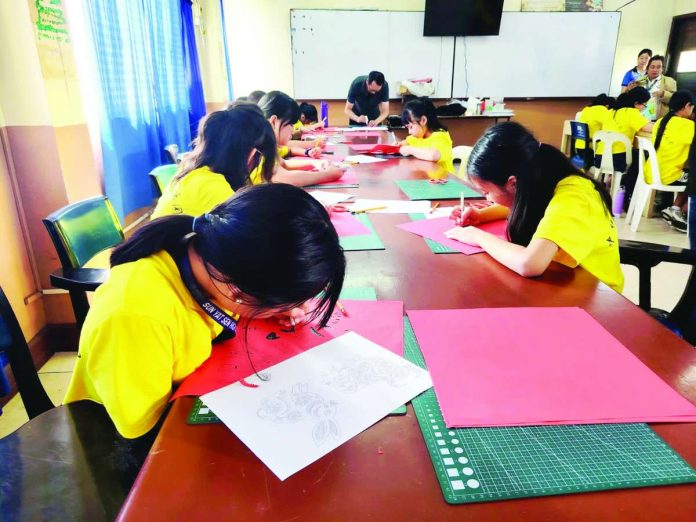
Sun Yat Sen High School has strengthened its bilingual and multicultural education through its first Chinese Culture Camp, which drew 414 participants and exposed students to Chinese painting, calligraphy, poetry, traditional music and dance, embroidery, paper cutting, clay sculpture and Wushu.
School officials said learning Mandarin is no longer merely about acquiring another language but about preparing young people to communicate across cultures and compete in an increasingly global environment.
“At our school, we see language as a gateway,” said Dr. Norivi A. Lorca, the school’s English principal.
“Our mission goes beyond traditional education. We want our students to understand perspectives from both Filipino and Chinese cultures, preparing them for a world that thrives on interconnectedness,” Lorca added.
The initiative builds on Sun Yat Sen High School’s Filipino-Chinese heritage while giving students practical opportunities to experience Chinese culture beyond conventional classroom instruction.
“We are deeply rooted in our Filipino-Chinese heritage, but our goal is to inspire students to connect not just locally, but globally. This camp is a celebration of that heritage. It’s about fostering pride in where they come from and equipping them with the skills to thrive in the future,” said Merlinda Castañeda, academic coordinator of the Elementary Department.
Students participating in the camp learned Chinese painting, calligraphy and poetry under arts and literature; Chinese songs, dances and traditional instruments such as the Hulusi flute and zither under music and performance; and clay sculpture, paper cutting and Chinese embroidery under traditional crafts.
Wushu, communication skills and lessons on the culture surrounding Mount Tai were also incorporated into the program.
“Culture is more than a subject we study; it’s a living experience,” Lorca said.
The school said Wushu, for instance, does more than expose students to martial arts. It also introduces them to traditions emphasizing discipline and respect, allowing cultural education to extend beyond academic lessons.
China university partnership
The cultural immersion program is also being supported through an international collaboration with Taishan University, which funded the camp. Educators from China provide courses and activities designed to broaden the students’ educational experience and reinforce Sun Yat Sen’s Filipino-Chinese identity.
“This partnership is about creating bridges of friendship, learning, and cultural exchange,” Lorca said.
School officials hope students will eventually develop not only proficiency in Mandarin but also a deeper understanding of Chinese culture and the values associated with it.
“Language and culture give them an advantage that can lead to future success,” Castañeda stated.
“This camp is the first of its kind at our school, and we hope to make it an annual event in the coming years. We expect that our Chinese learners will develop a love for Chinese culture and become globally competitive,” Castañeda added.
The school also extends scholarship grants and free tuition to academically outstanding Filipino-Chinese and non-Chinese students who lack the financial means to study there. Scholars must demonstrate a strong willingness to learn Mandarin as well as Filipino and Chinese cultures and traditions.
Sun Yat Sen High School sees bilingual education as a tool for developing students who can navigate different cultures confidently while retaining an appreciation of their heritage.
With Mandarin spoken by more than one billion people worldwide, proficiency in the language can also broaden opportunities in areas such as international trade, diplomacy and commerce.
For the Iloilo school, however, the goal extends beyond producing students who can simply speak another language. It seeks to develop young people capable of serving as cultural bridges — equipped with the language skills, cultural understanding and confidence to compete and connect in a diverse global society./PN