



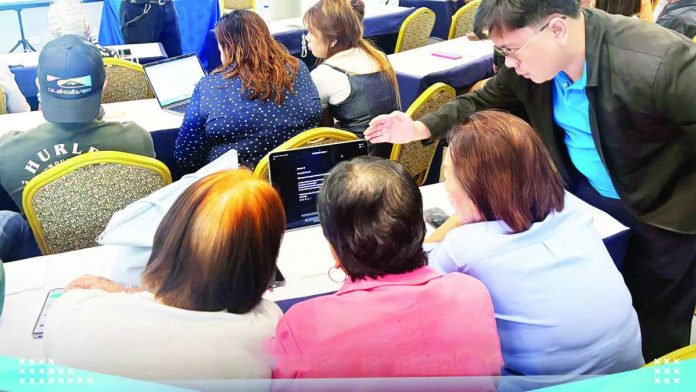
ILOILO City — From online scams and misinformation to biased profiling and students’ growing dependence on artificial intelligence (AI), vulnerable sectors in Western Visayas are pressing government planners to put stronger safeguards and grassroots realities at the center of emerging AI policies.
Persons with disabilities (PWDs), senior citizens, out-of-school youth (OSY), LGBTQIA+ individuals, youth representatives, small-scale vendors and informal workers raised the concerns during an AI Policy Lab led by the Department of Economy, Planning, and Development (DEPDev) Region 6 at the Artificial Intelligence Fest organized by the Department of Science and Technology (DOST) from August 3 to 5 in Iloilo City.
The consultations are expected to help shape policy recommendations at the regional and national levels as government seeks to ensure that rapid AI adoption does not deepen the digital divide or leave marginalized communities behind.
DEPDev-6 said AI policies must “Promote inclusive, ethical, and responsible AI adoption by empowering marginalized sectors through digital literacy, accessible technology, data protection, and community participation.”
Ma. Lean Letrato, chief of DEPDev-6’s Policy Formulation and Planning Division/Development Research Division, said people who could be most affected by AI must have a voice in crafting policies governing the technology.
“It’s crucial we listen to those whose lives are directly impacted by these technologies,” Letrato stated.
During the workshop, different sectors identified AI-related risks already affecting or threatening their communities.
Senior citizens raised alarm over widespread digital illiteracy, misinformation and online scams that could exploit vulnerable people using increasingly sophisticated AI tools.
Small-scale vendors and informal workers, meanwhile, pointed to poor internet connectivity in remote areas, warning that unequal digital access could prevent them from benefiting from AI tools that may improve their livelihoods.
LGBTQIA+ participants raised concerns over gender-sensitive language and biased profiling in AI systems, underscoring the danger that technology could reproduce or amplify existing social biases.
Out-of-school youth representatives also flagged children’s unregulated access to AI-generated content without sufficient parental supervision and called for safeguards against harmful material.
Younger participants, meanwhile, warned of possible cognitive decline arising from students’ overreliance on AI for academic work — an issue that prompted discussions on how educational approaches must evolve alongside the technology.
PWD participants said existing AI technologies often fail to reflect their realities and called for Filipino-centered datasets that better represent their experiences.
Dr. Carmelo S. Del Castillo, a professor at the University of the Philippines Visayas, compared AI to a child whose development depends on how it is taught.
“Ang AI daw bata. Kung tudluan ta ang bata sang malain, malain sa eh. Dapat tudluan ta sang maayo,” Del Castillo stressed.
He also emphasized the need for quality data and cautioned against allowing AI to replace human intuition and creativity.
Kenneth Lerona, founder of Cornelius Magnate Engagement & Consulting, said society must learn to distinguish between beneficial and harmful applications of the technology.
“We must prepare for AI; we need to identify what is good AI and what is bad AI,” Lerona stated.
Among the recommendations generated by the consultations were community-based digital literacy programs, sector-specific AI guidelines and continuing feedback mechanisms that would allow marginalized sectors to participate in AI policy development as the technology evolves.
Juvelyn Pamonag, OIC-assistant regional director of DEPDev-6, said technological advancement must ultimately be measured by whether it protects rights and benefits people.
“AI has the potential to transform how we live, work, learn, and access services. But technology alone cannot create progress; it is the values we uphold, the rights we protect, and the people we include that will drive meaningful change,” Pamonag stated./PN