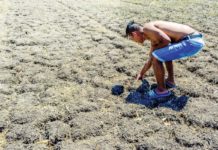




WESTERN Visayas is once again staring at a familiar enemy — drought. But this time, the warning signs appear more alarming. Six major river irrigation system dams in Iloilo, Antique, Aklan, and Capiz have already fallen to critical low water levels even before the wet season could fully establish itself. For a region heavily dependent on agriculture, this goes beyond being a weather concern; it forebodes economic and food security challenges.
The National Irrigation Administration (NIA) Region 6 has sounded the alarm. Barotac Viejo River Irrigation System Dam in Iloilo is down to only 0.50 marb water level. Other irrigation systems in Leon (Iloilo), Antique, Aklan, and Capiz are likewise struggling with dangerously limited water supply. NIA officials themselves admitted that when rivers and natural water sources dry up, there is little the agency can do except ration what remains.
That reality should deeply concern every local government unit, policymaker, and farming community in Western Visayas.
The region has long been vulnerable to El Niño episodes, but the threat today is more serious because climate patterns have become increasingly unpredictable and extreme. The Philippine Atmospheric Geophysical and Astronomical Services Administration’s warning of a possible “Super El Niño” should not be treated as routine forecasting. Western Visayas already knows what prolonged drought can do — damaged crops, reduced harvests, rising food prices, loss of farmer income, water shortages, and economic disruption that extends beyond the agricultural sector.
The crucial question now is this: Are we truly prepared?
To its credit, NIA-6 has already activated mitigation measures such as rotational irrigation, revised cropping calendars, alternate wetting and drying technology, and crop diversification. Farmers are being encouraged to plant drought-resistant and short-maturing crops such as mungbeans. These are practical and necessary interventions.
But preparedness cannot rest on NIA alone.
Local government units must now move beyond ceremonial climate meetings and disaster briefings. This is the time for decisive and coordinated action. Provinces and municipalities must ensure that contingency funds, water conservation programs, emergency agricultural assistance, and crop insurance systems are fully operational before the worst effects of drought arrive.
Many farming communities still lack sufficient access to modern irrigation technology, water impounding systems, post-harvest facilities, and climate-adaptive farming education. In some areas, farmers continue to depend almost entirely on rainfall. That vulnerability becomes deadly during prolonged dry spells.
Western Visayas also cannot ignore the environmental dimension of this crisis. Watershed destruction, deforestation, irresponsible land conversion, and illegal quarrying activities contribute to the depletion of rivers and water sources. Climate resilience is also about protecting ecosystems that sustain water supply in the first place.
The lessons from previous El Niños should have already pushed Western Visayas toward more aggressive long-term water management strategies. Yet many communities still scramble whenever drought warnings emerge. Preparedness must become institutional, continuous, and science-driven. The region cannot afford to wait until rice fields crack from dryness and farmers begin suffering heavy losses before acting decisively. Food security is not built during a crisis; it is secured long before disaster strikes.
What Western Visayas does next may determine whether the region survives the coming “Super El Niño” with resilience — or with regret.