


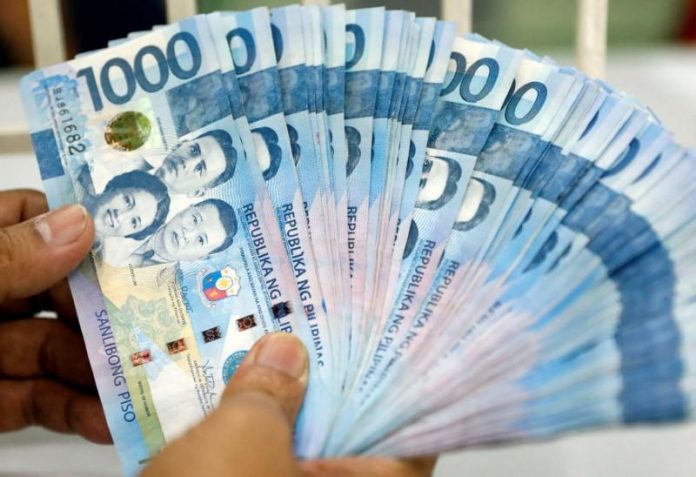
MANILA – Plastic, or polymer, 1000-piso bills may soon be in circulation by next year, the Bangko Sentral ng Pilipinas said on Monday as the central bank tries to find ways to make banknotes safer and more durable.
BSP Deputy Governor Mamerto Tangonan said the central bank will test polymer banknotes nationwide, possibly as early as 2022. Polymer banknotes are made up of plastic, while the current paper banknotes are made of cotton and abaca fiber.
Tangonan said they are looking at circulating polymer 1,000-piso banknotes to see if the bills are more durable and less prone to transmitting germs compared to traditional paper banknotes.
“The bacterial count on the banknote – that should be less because it is one of the reasons why we would like to test polymer. There is the economic factor of it. Durability and cost, and then there is also the environmental impact of it,” Tangonan said.
Polymer banknotes are also 100 percent recyclable, minimizing their impact on the environment, Tangonan said.
While polymer banknotes are more expensive to produce, they need to be replaced less often than paper notes. The Bank of England for example says polymer banknotes have reduced its production costs by 25 percent over a 10 year period.
The test banknotes will have the same look as the current 1,000-piso bill but will carry new security features. While the new polymer bills will be smoother than the current paper bills, people will still recognize them.
He added that after the test, they measure the data to determine if they should push through with transitioning to polymer banknotes.
The BSP said its test could run for at least three years, to prove if the polymer notes truly last 2.5 times longer than traditional banknotes under Philippine conditions. The current banknotes last an average of 18 months or 1.5 years each.
Tangonan said they are taking their lead from other countries that are already using polymer banknotes.
“The other countries where we have drawn experiential data from are countries like Canada, Australia, New Zealand, U.K. Mexico, those countries, among others.”
He stressed it will be well planned so as not to take the public by surprise.
“We learned from other central banks, that when you do a transition, you minimize the design change. We will abide by that principle by as much as possible. The public has to get used to it. We don’t want the public to not recognize it when it comes out.”
This is not the first time the BSP proposed the use of polymer banknotes. It was suggested in 2009, but the proposal was shut down. Tangonan says the COVID-19 pandemic, as well as heightened environmental concerns, have pushed them to propose the use of polymer notes again.
The BSP also addressed concerns on the possible negative impact of this shift on the Philippine abaca industry. Tangonan said the impact should be minimal, and they are already making a push for other government agencies to use abaca paper to make up for any negative developments.
The central bank has reached out to the Department of Foreign Affairs and Land Registry Authority for the possible use of abaca in passports and titles, he said.
The BSP is also reaching out to the Philippine Statistics Authority for the possible use of abaca in birth certificates and other civil registry documents.(ABS-CBN News)