
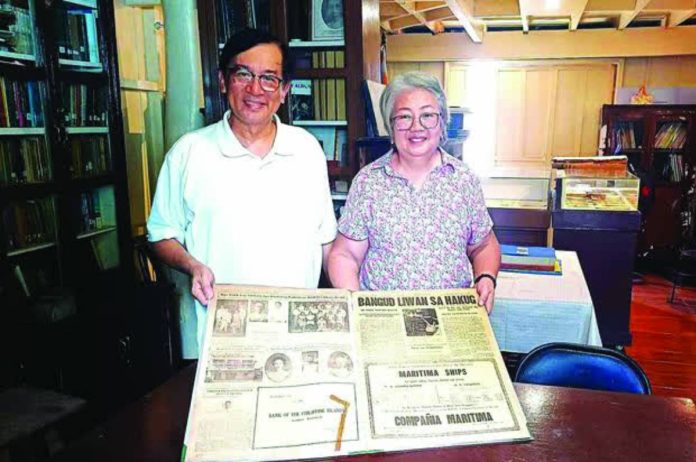
ILOILO City – A pre-World War 2 Hiligaynon publication that once stirred Ilonggo patriotism and civic consciousness secured a place in the country’s documentary hall of fame.
Founded in 1913, the now defunct Makinaugalingon was officially inscribed in the National Register of the UNESCO Philippines Memory of the World.
The recognition, formally announced on February 23, 2026 by the UNESCO National Commission of the Philippines, affirms the newspaper’s national historical significance and elevates it as part of the Philippines’ protected documentary heritage.
Founded by Ilonggo journalist-educator Rosendo Mejica, Makinaugalingon became a vital platform for patriotism, civic awareness, and social commentary in Western Visayas during a critical period in Philippine history. Its inclusion in the register ensures that its pages — once read by Ilonggo intellectuals and reformists — will be preserved and safeguarded for future generations.
Mayor Raisa Treñas said the move strengthens efforts to protect historical records that define the Ilonggo narrative.
“Our story gives meaning to our identity as Ilonggos, which is why we celebrate the official inclusion of Makinaugalingon in the National Register of the Memory of the World of the UNESCO National Commission of the Philippines,” Treñas said.
She stressed that the recognition goes beyond symbolism and secures long-term preservation of historical materials.
“Through the Memory of the World Committee, our documentary heritage is preserved and protected. In every page of Makinaugalingon is the story of our culture, our origins, and our aspirations as Ilonggos,” she said.
Treñas added that the milestone serves as a call for Ilonggos to value their heritage and support initiatives aimed at preserving cultural and historical records.
Nick Deocampo, chairman of the Memory of the World Committee of the UNESCO National Commission of the Philippines, underscored the importance of making documentary heritage accessible to the public rather than merely archiving it.
“If we stick only to original records, that is what we call archival. In other words, when something is archival, it is simply kept in libraries, deteriorating over time and no longer being used,” Deocampo said.
He emphasized that historical records must remain relevant and accessible to foster deeper understanding.
“We belong to a new generation with a new enlightened consciousness. That is why I took the opportunity to present these materials publicly, to show what we can do with our history. I belong to a generation that believes we should not just keep records, but actively use them to educate and inspire,” he said.
Deocampo added that preservation should not remain confined within academic institutions but must benefit ordinary citizens.
“Knowledge is important because it shapes identity. Those of us in the knowledge sector have a responsibility to ensure that people understand their heritage,” he said.
He also highlighted the role of policymakers in supporting heritage conservation efforts.
“They may hold political positions, but they are also citizens. They can legislate and help ensure that our historical heritage is preserved and recognized,” Deocampo said.
The Memory of the World Programme seeks to safeguard documentary heritage of global and national significance, ensuring that historically important records such as Makinaugalingon remain accessible to present and future generations — a recognition that places Iloilo’s intellectual legacy firmly on the national cultural map./PN