


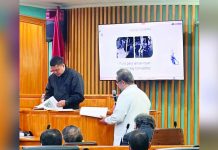

THERE ARE hearings you watch for noise, and hearings you watch because something in you whispers, “This one matters.” The most recent Senate exchange on the Discayas’ bid to become state witnesses felt like both.
Teachers watching the feed during lunch, guidance counselors checking replayed livestreams between sessions, and students tuning in for the drama all kept circling back to the same plain question: If the money was not theirs, why not return it?
You do not need a law degree to understand that instinct. When public funds vanish into ghost flood-control projects and overpriced materials, people expect the stolen to be restored. Yet one senator insists that returning billions is unnecessary, and that insistence feels less like a legal view and more like someone blocking a door he does not want anyone to push.
Many of us have grown tired of legal gymnastics that ignore basic decency. Sen. Rodante Marcoleta is technically correct that the Witness Protection Act does not list restitution explicitly. Still, as Justice Antonio Carpio reminded the public, the law also requires compliance with “legal obligations” — and returning unlawfully obtained government funds is exactly that.
Educators understand this distinction well. A student may meet minimum requirements, but integrity is found in the part that goes beyond the bare minimum. The same logic applies here, except the stakes involve flood-prone barangays where classrooms drown and families evacuate every rainy season. In those places, public money is not an abstract concept. It is the difference between safety and yet another lost week of learning.
What unsettled many viewers was not only the argument but the tone. Instead of treating restitution as a sign of good faith, the opposition senator Marcoleta pushed back as if the idea itself was an insult.
Then Secretary Jesus Remulla and Prosecutor General Richard Fadullon, who both, in different situations, calmly framed restitution as both moral and practical, was interrupted and framed as unreasonable.
Blue Ribbon Committee chair Sen. Ping Lacson even suggested that returning the money could simply be a pledge. Still, the firmer the reasoning, the sharper the resistance.
This contrast became even clearer later on when Sen. Erwin Tulfo, referring to RA 6981 (Witness Protection Act), asked PG Fadullon what ordinary people had been asking all along: Is it unreasonable to expect someone who claims remorse to return money that was never theirs?
Fadullon didn’t even pause. “It is definitely not unreasonable,” he replied, adding that it is “only reasonable within reason to return the same.”
To many viewers, that brief, steady exchange felt like a breath of sanity — a moment when the law finally sounded like the people it’s supposed to protect.
Teachers joked that it felt like watching a student defend a grading loophole, or someone insisting umbrellas are optional because the handbook does not mention typhoons. The humor helped soften the discomfort, but the worry remained: When a leader fights too hard to preserve an exemption, people start wondering what exactly he is sheltering.
To many ordinary viewers, the intensity of the senator’s defense didn’t go unnoticed. The tone made some people wonder whether some form of understanding or assurance might have existed, at least in their perception. This is not to say that any actual deal took place — only that the exchanges came across, to many who were watching at home or at work, as unusually protective. In moments like that, people naturally read between the lines, even if the real intent remains known only to the senator himself.
When the Senate leadership changed — Chiz Escudero out, Tito Sotto in, and Marcoleta removed as Blue Ribbon chair — the expressions of Curlee and Sarah Discayas changed too. Their earlier confidence evaporated. You could almost see the quiet panic of people who suddenly realized the person they were counting on no longer had the power to open the door they were promised through.
Restitution, after all, is not about money alone. It is about credibility. In restorative justice work, returning what was taken is often the first sign that someone understands the harm done. We do not need legalese jargon to grasp this. (To be continued)/PN