


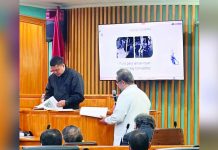

WORKING on my dissertation, I came upon a study that fundamentally supported my viewpoint on instruction — especially in mathematics. Under the authorship of Dr. Matthew Lasap, my dean at ISUFST’s College of Education and a former colleague from my Ateneo de Iloilo days, the study offered a relatively novel perspective on how we might more involve students in learning. By pushing beyond simply solving problems to promote critical and creative thinking, Dr. Lasap’s study on “Design and Technology — Performance Task-Based Instruction (DT-PT BI) Towards the Development of Cognitive Skills for Understanding in Mathematics” questioned established approaches of teaching math.
Math has been taught for far too long as a set of steps: memorize, repeat, and solve. Although this might help students pass tests, it does not foster the more advanced cognitive abilities required today. The study by Dr. Lasap alters that by including practical activities requiring not only technical ability but also creativity and problem-solving. This change fits the principles of holistic education, in which the objective goes beyond mere instruction to include intellectual, social, and ethical development of the entire person.
Starting with an exhaustive assessment of performance tasks utilized in math classes, the study employed a mixed-methods approach. Teachers who participated in the study gave comments pointing up what worked and what needed work. After that, this information was applied to create a fresh project more closely related to the community — such as planning mangrove preservation. Students were assigned projects with practical uses instead of abstract challenges, so making math more interesting and relevant.
Students who worked with DT-PT BI showed clearly better cognitive flexibility and problem-solving in the second phase of the study. They were using math ideas in original, meaningful ways, not merely memorizing formulas. Essential was this change from procedural learning to problem-solving. Many students struggle with what the researcher refers to as “procedural thinking,” a rigid, step-by-step approach that stunts originality and critical thinking. The study supports a shift in instruction toward teaching students to investigate several answers, so encouraging deeper thought and creativity.
A key component of the DT-PT BI approach is the “working atmosphere” — a classroom where students work together, exchange ideas, and tackle issues from several angles. For Filipino students, who are used to working in groups whether in their communities or in the classroom, this is especially relevant. Deeply ingrained in our society is the idea of bayanihan, or communal unity; Dr. Lasap’s work honors this cultural strength by supporting group problem-solving. It’s about cooperating to solve practical problems, not only about using arithmetic abilities.
This research also emphasizes the function of the teacher as a facilitator rather than only a knowledge distributor. Professional learning communities (PLCs), in which teachers work together to enhance their methods, are underlined by Dr. Lasap as very important. Encouragement of honest communication and shared learning might be a revolution in a nation where teachers sometimes operate in solitude. Teachers can establish a more dynamic and encouraging classroom by means of resource sharing, ideas, and strategies. (To be continued)/PN