

ILOILO – Alarmed by the arrest of three barangay captains in separate anti-drug operations, the Department of Interior and Local Government (DILG) in Iloilo is pushing for province-wide random drug testing of all barangay officials. This proposed sweeping crackdown seeks to allay growing concerns over alleged drug links within grassroots leadership.
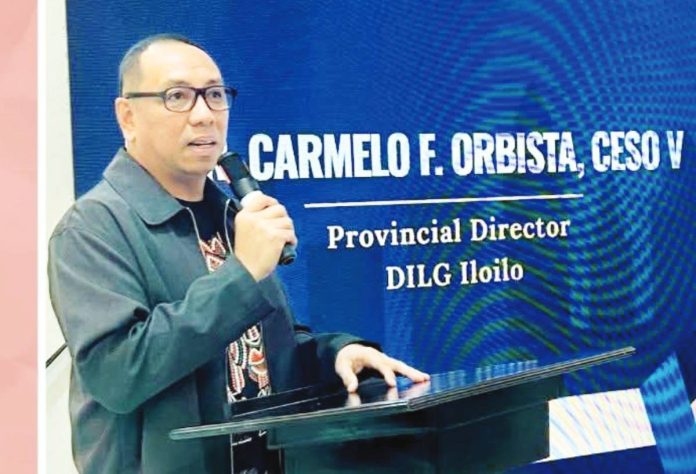
DILG-Iloilo provincial director Engr. Carmelo Orbista said the proposal is now being studied in coordination with the Liga ng mga Barangay (LnB) and the League of Municipalities of the Philippines (LMP) – Iloilo Chapter to ensure funding and broader implementation.
“This will entail funding of course, (but) ang opisina namon wala man gid sang funding so we need the support of our local government units (LGUs),” Orbista said in an interview.
Orbista admitted the situation is “medyo alarming,” noting that even the Philippine National Police continues to monitor some barangay officials for possible involvement in illegal drugs.
The proposed mass testing comes after the arrest of three barangay captains in separate buy-bust operations.
Jeguer “Junjun” Verbal, 51, of Canauili, Janiuay town, was arrested after authorities seized from him 410 grams of alleged shabu valued at P2,788,000 and 8.2 grams of dried marijuana leaves worth about P4,100.
In San Dionisio, alias “Matmat,” 39, the village chief of Tuble, was caught with around 955 grams of suspected shabu with an estimated value of P6.49 million.
Meanwhile, Redan Manzano, 52, of Barangay Bundolan, San Dionisio, was apprehended with more than P1.5 million worth of suspected shabu.
Orbista said the timeline for the random drug testing has yet to be finalized, as the matter will be discussed on March 5 in a meeting with the Iloilo provincial government, the LnB, and the Provincial Anti-Drug Abuse Council (PADAC), among others.
He expressed hope that implementation could begin “as early as possible.”
While some local government units already conduct their own random testing, Orbista stressed the need for a unified, province-wide program to ensure that all barangay officials are covered.
Beyond testing, the DILG is also pushing for an Anti-Drugs Summit to be funded by the Iloilo provincial government under Gov. Arthur Defensor Jr., with all barangay captains in the province expected to attend.
Orbista said discussions are underway to determine the final topics and rationale of the summit, adding that similar activities may later be rolled out at the municipal level to include barangay kagawads and other officials.
“Gusto naton ini nga i-conduct man or mapapanaog man ang pag-conduct sang same activity sa municipal level and ang involve naman not only the punong barangays but also the barangay kagawads and other barangay officials at their level naman,” he said.
The DILG is also reviewing the parameters for declaring barangays as drug-cleared, a framework last set in 2017, to determine whether stricter standards are needed.
In Iloilo province, only one barangay — Barangay Bolaqueña in Estancia — remains undeclared as drug-cleared, largely due to challenges in areas with numerous National Housing Authority units.
“I think i-review naton kay lantawon pa naton ang kung ano ang mahimo naton nga para mas ma-istriktahan pa gid or mas stringent pa gid ang aton nga pag-conduct sining mga barangay drug clearing program,” Orbista said.
Orbista also backed the provincial government’s plan to establish an operations center at ports to strengthen intelligence validation and tighten monitoring against the entry of illegal drugs into Iloilo.
Calling it a serious breach of public trust with grave legal consequences, Gov. Arthur Defensor Jr. warned that barangay officials caught in illegal drugs face aggravated liability and harsher penalties.
Defensor emphasized that barangay officials are expected to know that involvement in illegal drugs constitutes an aggravated offense due to their position and carries stiffer penalties.
The governor added that illegal drugs cut across all sectors and positions, noting that accountability applies to everyone regardless of status.
Violation of sections 5 and 11 (sale and possession of dangerous drugs), Article II of Republic Act 9165, or the Comprehensive Dangerous Drugs Act of 2002, carry penalties ranging from life imprisonment to death and fines from P500,000 to P10 million./PN