


INDEED, in business, whenever there is competition, the consumer ultimately wins. Competing establishments are compelled to offer better products and services to attract customers, giving the public more choices and better value. History has consistently shown this to be true, whether in retail or services—competition brings out the best.
Lately, a rather revolutionary scenario is brewing in Iloilo Province: a contest between a well-financed, privately owned power distribution utility with a solid track record, and an aging, financially unstable electric cooperative plagued by years of poor performance.
What makes this development particularly interesting is that the power industry has long been viewed as a monopoly—far removed from the everyday dynamics of open business competition.
Which brings us to this: recently, a power cooperative in Iloilo claimed that no Southeast Asian country allows competing power distribution utilities.
Iloilo Electric Cooperative III General Manager James Balsomo questioned proposals for overlapping utilities, arguing that such competition does not exist anywhere in Southeast Asia and is not financially viable for distribution networks.
This discussion followed the filing of House Bill No. 6292 by 1st District Rep. Janette Garin, which seeks to expand the franchise of MORE Electric and Power Corporation into seven municipalities in her district. Garin pointed to MORE Power’s performance in Iloilo City—lower electricity rates, modernized facilities, and an expanded customer base—as clear proof of the benefits of competition.
She also cited the Constitution’s provision that public utility franchises must not be exclusive, saying: “Public interest will be better served if Ilonggos in the 1st District are given a choice.”
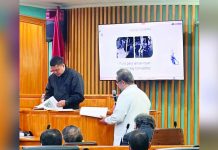
This was how Roel Castro, MORE Power president and CEO, responded during a press conference to the claim that no Southeast Asian country allows competing distribution utilities.
“I think that’s accurate. But there’s one—here in the Philippines,” Castro said, noting that while overlapping franchises may be unusual, lawmakers allow them because “you cannot actually innovate and change for the better if everything stays the same.”
He stressed that the company’s focus is service quality, not rivalry.
“If you may call it a competition, yes. But at the end of the day, if we can give this type of service here in Iloilo—not perfect, but good enough that residents, business owners, and city officials acknowledge the improvement—then why not offer it outside Iloilo City in the most legal way?” Castro said. “If that pushes others to improve, I’m fine with that. In the end, the consumers win.”
If everything falls into place, this could well feel like an early Christmas for electric consumers in Iloilo Province, including those in the 1st District.
MORE Power has already earmarked an initial ₱2 billion for activities covering its expanded franchise areas in the province.
Castro also disclosed that the Energy Regulatory Commission (ERC) has already issued the Certificate of Public Convenience and Necessity (CPCN) for MORE Power’s expanded franchise areas in the second and fourth districts of Iloilo.
In fact, the company has already energized its first customer under the expanded coverage—the University of St. La Salle–Iloilo Campus in Barangay Maliao, Pavia.
And speaking of Christmas, MORE Power, in partnership with the Iloilo City Government, led the Christmas tree lighting ceremony at Jaro Plaza, marking the start of the city’s holiday festivities.
Now on its sixth year, the event was held simultaneously with a similar ceremony at Plaza Libertad in Iloilo City Proper. The pyramid-shaped giant Christmas trees light up at dusk and turn off at dawn daily until the first week of January 2026.
Rest assured, the electricity consumed by these giant Christmas trees and other holiday lights in Jaro Plaza and Plaza Libertad is courtesy of MORE Power.
Finally, here are the comparative residential power rates as of November 2025:
* MORE Power – ₱11.8558/kWh
* ILECO I – ₱12.6496/kWh
* ILECO II – ₱12.9274/kWh
* ILECO III – ₱12.3410/kWh
Need I say more—MORE (pun intended), of course./PN