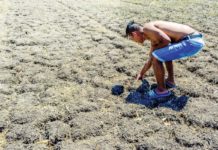



THE RISING sea levels is a direct consequence of climate change and, in years ahead, most of Manila will be underwater.
All this is due to global warming and the reliance of the world economy on burning fossil fuels and the failure to quickly develop renewable sources of energy like solar, wind and geothermal power generation. The Philippines has an abundance of these renewal energy sources but development is slow despite government incentives.
The COP30 (the 30th United Nations Climate Change Conference), the main, formal UN climate negotiation conference will be held in Belém, Brazil from November 10-21. They will try to persuade national leaders to reduce carbon emissions and slow global warming. However, in total contradiction to the purpose of the conference, the Brazilian government has cut down thousands of trees to make way for a new four lane highway right through the rain forest to reach the city of Belem.
They want to make it easier to travel for the 50,000 delegates that are expected to attend the environmental climate change summit this November. Many environmental defenders and conservationists are angry and outraged at the negative environmental impact the project is having on the forests. This is the contradiction. This deforestation damages the ecosystem, the wildlife, and the lives of the thousands of forest dwellers who have sustainable livelihoods in the forests.
The forests have a vital role in controlling climate change by cooling the planet and absorbing CO2 that is heating up the globe. The Philippines has only three percent of its original rainforest left. The very purpose of COP30 is to preserve rainforests, not to chop them down. But this is the weakness of human nature. This contradiction that we live with is causing our planet to overheat, bringing more deadly typhoons and massive destruction.
The church in the Philippines is also challenged to care for the Creation and help mitigate the negative effects of climate change. Pope Francis, when he was alive, called for a global “ecological conversion” and a radical change in lifestyles, production, and consumption to “save the planet.”
His core message, detailed primarily in his 2015 encyclical Laudato si’ and 2023 apostolic exhortation Laudate Deum, is that the environmental crisis is a moral and ethical issue inextricably linked to social injustice and the “throwaway culture.” He urges the “progressive replacement without delay” of highly polluting fossil fuels (coal, oil, gas) with renewable energy sources of which the Philippines has great capacity.
In the coming week, we will witness debates and passionate speeches during COP30 but what is needed is direct action to stop burning fossil fuels, not more speeches. The multinational energy corporations are the villains in this story. They are doing all they can to stop the move to renewables.
In the Philippines, the energy corporations filed for permits to build 20 more coal-fired power plants. They are on hold by the Department of Energy. Unless there is serious action to stop global warming beyond 1.5 degrees, the planet will continue to heat up and the Philippines and many nations will endure more intense typhoons in the future./PN