



ORAL DISEASES are among the most common health conditions worldwide.
And yet they remain largely overlooked in public health discussions.
From untreated cavities to advanced gum disease, millions suffer quietly — often unaware that poor oral health can trigger far more serious medical problems.
Today, according to global health data, nearly 3.5 billion people are affected by oral diseases.
Tooth decay, or dental caries, remains the most prevalent. In many low- and middle-income countries, limited access to affordable dental services means minor issues often escalate into severe infections, tooth loss, and chronic pain.
Health experts warn that the consequences go far beyond the mouth. Research increasingly links gum disease to cardiovascular illness, diabetes complications, respiratory infections, and adverse pregnancy outcomes.
The mouth is not separate from the body, public health dentists often emphasize. Inflammation and bacteria originating in the gums can enter the bloodstream, contributing to overall health problems.
In the Philippines and other developing nations, access remains a challenge. Rural communities frequently lack dental clinics, and public hospitals are often understaffed. Preventive services — such as fluoride treatments, sealants for children, and routine cleanings — are rarely prioritized. Instead, dental care is sought only when pain becomes unbearable.
Cost is another barrier. Private dental services can be expensive, placing routine checkups out of reach for many families. As a result, preventive habits like twice-yearly cleanings are replaced by emergency extractions.
Children are particularly vulnerable. Tooth decay can impair nutrition, speech development, and school performance. Studies show that children with untreated dental pain are more likely to miss school and struggle academically. Yet oral health education in many schools remains minimal.
Public health advocates are calling for the stronger integration of dental care into universal healthcare programs. They argue that oral health screenings should be part of routine medical checkups and that governments should invest in community-based prevention campaigns.
Fluoridated toothpaste, affordable toothbrush distribution programs, and public awareness drives can dramatically reduce disease rates. In countries that implemented water fluoridation, cavities declined significantly within a generation.
Technology is reshaping access. Teledentistry now allows remote consultations, enabling early diagnosis and referrals without requiring immediate travel to urban centers. Mobile dental clinics are reaching isolated communities, offering preventive services where permanent facilities are unavailable.
Oral health begins at home. Brushing twice daily with fluoride toothpaste, flossing, limiting sugary snacks, and scheduling regular dental visits remain the foundation of prevention. Yet without systemic support, personal habits alone cannot solve widespread disparities.
The growing consensus is clear: oral health is not cosmetic — it is fundamental. Treating it as a luxury rather than a necessity perpetuates preventable suffering and strains healthcare systems with avoidable complications.
As policymakers debate healthcare reforms, advocates hope oral health will no longer be sidelined. Because when it comes to overall well-being, a healthy smile is more than an esthetic asset — it is a public health imperative.
***
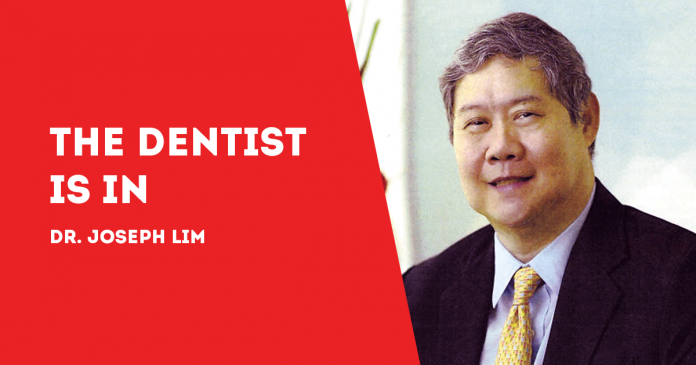
Dr. Joseph D. Lim, Ed. D., is the former Associate Dean of the College of Dentistry, University of the East; former Dean, College of Dentistry, National University; Past President and Honorary Fellow of the Asian Oral Implant Academy; Honorary Fellow of the Japan College of Oral Implantologists; Honorary Life Member of the Thai Association of Dental Implantology; and Founding Chairman of the Philippine College of Oral Implantologists. For questions on dental health, e-mail jdlim2008@gmail.com or text 0917-8591515.
***
Dr. Kenneth Lester Lim, BS-MMG, DDM, MSc-OI, graduated Doctor of Dental Medicine, University of the Philippines, College of Dentistry, Manila, 2011; Bachelor of Science in Marketing Management, De la Salle University, Manila, 2002; and Master of Science (MSc.) in Oral Implantology, Goethe University, Frankfurt, Germany, 2019. He is an Associate Professor; Fellow, International Congress of Oral Implantologists; and Fellow, Philippine College of Oral Implantologists. For questions on dental health, e-mail limdentalcenter@gmail.com./PN