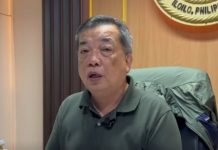


ILOILO City — The Department of Education (DepEd) may begin incorporating lessons on the West Philippine Sea (WPS) into the Social Studies curriculum as early as School Year 2026–2027, a move former Supreme Court Associate Justice Antonio Carpio said is crucial to strengthening the Philippines’ global case against China.
During a forum here, Carpio stressed that equipping present and future generations of Filipinos with a “clear understanding, knowledge, and explanation” of the WPS is key to compelling China to comply with the 2016 arbitral ruling affirming the Philippines’ rights over disputed territories.
“The very important thing is we have to present a coherent historical and legal narrative, something that is compelling because that is what the world understands, and we have failed to do that,” Carpio said.
He noted that misinformation about the WPS continues to spread, particularly online, underscoring the urgency of grounding Filipinos in verified facts through education.
Carpio explained that most countries comply with arbitral rulings, with China being a notable exception, but expressed confidence that sustained global pressure could eventually lead to compliance.
“The China will understand if the world will tell China you are wrong, you have to comply, and that’s why it is important that we have to have the clear explanation to the world why China must comply. If all the countries of the world will tell China you have to comply, eventually the China will comply because China needs the world. China has to export to survive. China has to import oil to survive, so it needs the world, in cannot exist on its own,” he said.
Carpio delivered his lecture on the WPS, focusing on “The 1875 Carta General Del Archipielago Filipino,” before Gov. Arthur Defensor Jr., department heads, academe, lawyers, and Philippine Coast Guard personnel at Casa Real de Iloilo on March 26.
He described the issue as an “inter-generation struggle,” noting that the Philippines must sustain its position over a long period.
“I call this inter-generation struggle because it will take not the only the present generation of Filipino but the next generation of the generation after them. If China has 100 years time frame, we have 200 years. So, I never expected China to comply immediately because China will not do that but eventually when everybody in the world will tell China you are wrong, you have to comply, eventually I think China will comply,” Carpio added.
Carpio said he has already discussed the inclusion of WPS lessons with Education Secretary Sonny Angara.
“Maybe next school year, it will be part of social studies, the West Philippine Sea,” he said.
He presented four historical maps supporting the Philippines’ claim: the 1734 Murillo Velarde Map, 1808 Carta General del Archipielago de Filipinos, 1875/1902 Carta General del Archipielago Filipino, and the 1898 Treaty of Paris Map.
“The 1734, 1808, and 1875 maps show Scarborough Shoal and the Spratlys as Philippine territory. The 1898 map triggered the signing of the 1900 Treat of Washington to include Scarborough Shoal and the Spratlys, among others in the cession of the 1898 Treaty of Paris,” Carpio explained.
He also revealed that seminars for teachers in Metro Manila and the Bicol region have already been completed, with more planned in the coming months.
“We have developed the curriculum; it’s moving, but it’s not moving fast enough. But yes, there is already an order from DepEd to include this in the Social Studies curriculum. So, with the help of the Coast Guard, what should be in that West Philippine Sea module — it’s been done,” he said.
Carpio added that discussions are ongoing on adopting a holistic approach to public education on the WPS, including the possible creation of modules for display in public libraries.
“We have to incorporate this study; this is the only way to show the world. So, if we’re divided, they won’t listen to us,” he stressed.
Meanwhile, Carpio praised Iloilo Province’s I Love WPS Ordinance, which strengthens the integration of WPS history, legal basis, and the 2016 arbitral ruling into basic education in both public and private schools.
“I think every city and every provincial government should has same resolution and can be followed nationwide because we really have to invite, understand this because if we don’t understand how can we explain to the world and we need the world as an ally for this,” he said.
He vowed to continue his nationwide campaign to educate Filipinos on the WPS, emphasizing that the country holds a strong historical and legal claim.
“If you know the story, that we have the strongest title, historically and legally, but it’s not going out there, what will you do? You do the same thing because we know we are correct, we have the strongest claim. But we are not able to articulate it correctly. So, if you just keep silent, then nothing will happen, but sayang, it’s all there,” Carpio said./PN