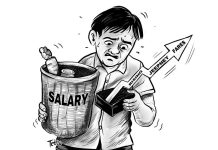



When Numbers Rise, So Does My Blood Pressure
Every year, almost ritualistically, I scroll through the Department of Labor and Employment’s regional wage orders. NCR gets another hike. Calabarzon follows. Western Visayas adjusts. Caraga inches forward. The Philippine Information Agency posts fresh announcements from the Regional Tripartite Wages and Productivity Boards. Then, quietly but firmly, the government releases another tranche of salary updates under the Salary Standardization Law every January.
And every year, as the figures rise, I pause. I scratch my head. I take a long breath.
Not because wage increases are wrong. They are necessary. People deserve dignity. But the scene feels painfully familiar. Employers look like they are already bleeding. Workers still cannot keep up with rent, rice, transport, and electricity. It feels like watching two exhausted runners trapped on a treadmill that keeps speeding up. Nobody is actually moving forward.
In Metro Manila, minimum wage now sits close to ₱695 a day for non-agricultural workers after the latest order. In many provinces, it hovers near ₱500. On paper, that looks like progress. In life, it often feels like a bandage on a wound that keeps reopening.
So the question keeps returning, quietly but stubbornly: magkano ba ang sapat?
Why Wages Rise but Life Still Feels Heavy
The Philippines lives with a strange contradiction. We debate wages every year, yet almost everything grows more expensive. Rice jumps after fuel hikes. Jeepney fares follow oil prices. Boarding houses quietly raise rent. Electricity bills arrive like small heartbreaks.
One Saturday at a wet market, I watched a vendor flip her cardboard sign: ₱55 per kilo of rice had become ₱62. A tricycle driver muttered that his minimum fare was about to rise again. A student in front of me counted coins twice before buying half a kilo of tomatoes. None of them mentioned salaries. They mentioned survival.
The deeper issue is not simply that wages are low. Life here is structurally expensive. Agriculture remains inefficient. Industry is thin. We import too much of what we consume and export too much cheap labor and raw materials. Logistics are costly. Energy pricing is unkind. Competition is limited where it matters most.
When a worker asks for a raise today, it is rarely about ambition. It is about groceries, transport, and rent. Wages no longer chase productivity—they chase prices. And when wages finally move, prices politely follow, like shadows that never leave.
So we end up in a loop: raise wages, prices respond, real buying power barely changes, frustration returns. Another petition comes. The treadmill speeds up again.
The Imported Habit of Thinking Small
We have learned a dangerous habit: treating economic pain as personal. If life is hard, negotiate your salary. If bills rise, hustle harder. If you fail, blame your income.
It sounds empowering, but it hides the system behind the suffering.
The problem runs deeper than wages. It is stitched into the machinery of our economy. For decades, the Philippines has sent workers abroad like commodities while paying a premium for goods we barely make ourselves. Invisible forces shape daily life: transport fares creep up, power bills climb silently, food prices edge higher, and even the cost of a modest home is quietly inflated. Monopolies and cartels hold sway where competition should protect consumers.
Foreign investors are invited in politely, but only where the few benefit. Many pause at the door when they discover that doing business here means paying some of the highest electricity and utility costs in Southeast Asia. Inefficiency and inequality spread like stubborn weeds, choking the roots of real progress.
Employees fight inside a structure that already makes living costly by design. The problem is not only what we earn. It is what everything costs before the paycheck even arrives.
A friend once joked that his salary increase lasted exactly one grocery trip. After that, rent adjusted. Electricity followed. Even the sari-sari store raised prices. His raise felt real for three days. Then reality resumed. (To be continued)/PN