


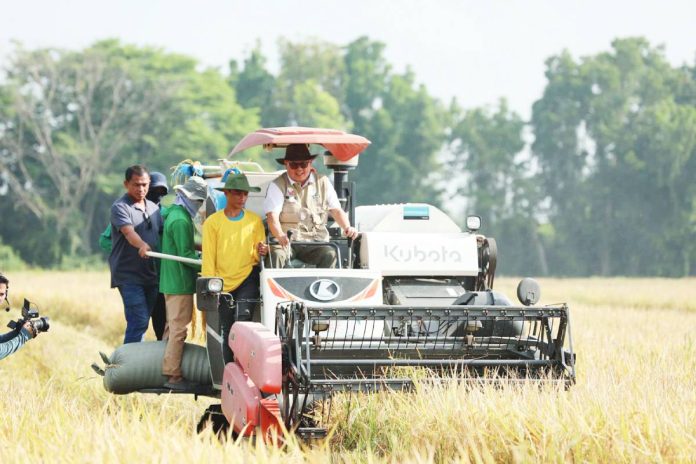
PALAY production in the first three months of 2026 declined by 6.26% year-on-year, according to latest data from the Philippine Statistics Authority (PSA).
The palay harvest stood at 4,400,567.90 metric tons during the January to March 2026 period, down from 4,698,724.31 in the same period last year.
In a chance interview with reporters on Thursday, April 30, Department of Agriculture (DA) spokesperson Assistant Secretary Arnel de Mesa said the palay output decline in the previous quarter was due to irrigation delays to some 40,000 hectares of rice being serviced by the Upper Pampanga River Irrigation System (UPRIS).
Portions of UPRIS, which serves the province of Nueva Ecija and parts of Pampanga, Tarlac, and Bulacan, were damaged by illegal quarrying activities late last year.
“There was a delay in planting because of the damage to UPRIS… It was about 40,000 [hectares],” de Mesa said.
The DA official said now that the irrigation system is repaired there was a “quick turnaround” to be expected in palay harvest in the second quarter of 2026.
“Those [affected areas] will be added to the production in the second quarter,” de Mesa said.
Earlier last month, Agriculture Secretary Francisco P. Tiu Laurel Jr. assured the public that government measures are keeping rice supply stable despite rising global oil prices and farm input costs.
He said National Food Authority warehouses are nearly full, backed by a solid domestic harvest.
The Department of Agriculture has also moved quickly to cushion the impact of rising costs. The agency rolled out a P10-billion assistance package for farmers and fisherfolk, alongside fuel subsidies and targeted interventions. Rice was prioritized, followed by other key commodities, reflecting a focused and phased response strategy. (GMA News)