




By NELJOY N. GALIGAO
ILOILO – The Provincial Health Office (PHO) has raised concerns over the number of animal bite incidents in Iloilo, with a total of 16,210 recorded cases in the first quarter of 2025 alone — putting pressure on the province’s limited rabies vaccine supply despite the absence of any human rabies fatalities this year.
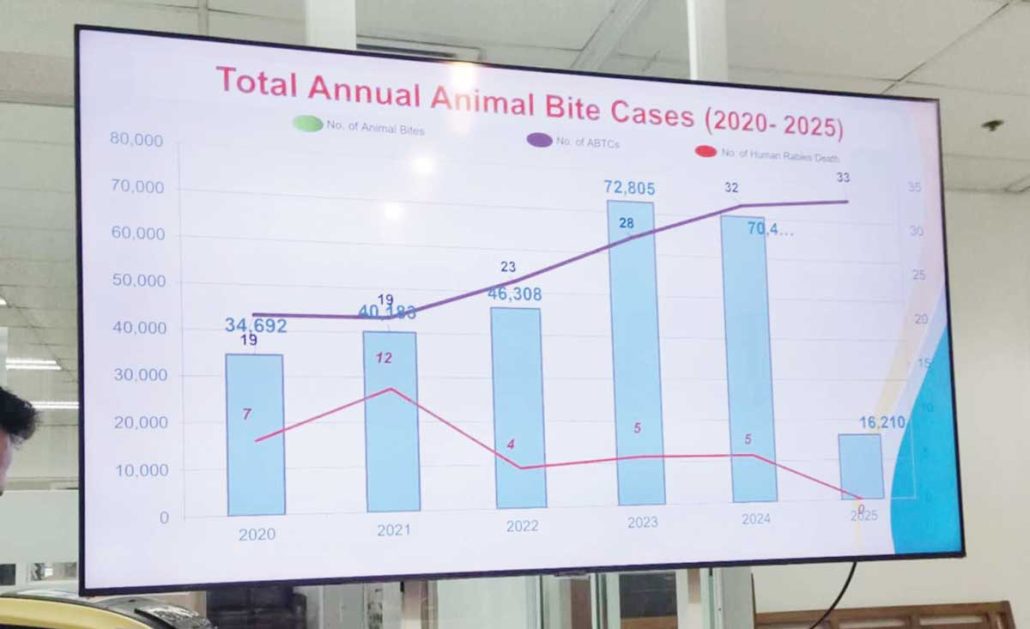
Data released by PHO showed that dog bites accounted for the majority of the cases at 8,230, followed closely by 7,944 cat bites, and 36 involving other animals.
Although the current figure is still below last year’s annual total of over 70,000 animal bite cases and five human rabies deaths, health officials remain on high alert to prevent any resurgence.
Provincial Health Officer I Dr. Rodney Labis emphasized that sustained vigilance is necessary. “We are closely monitoring the situation. Our priority is to prevent human rabies cases, especially from dog and cat bites,” he said.
Historical data revealed that 2021 had the highest number of human rabies cases at 12, a stark contrast to the five cases in 2024. As of now, Iloilo has recorded zero rabies deaths for 2025.
Provincial Health Officer Dr. Maria Socorro Quiñon expressed alarm over the growing numbers.
“First quarter pa lang, 16,210 na ang animal bite cases,” she said, noting that vaccine supplies are already being stretched thin.
“Every day, more people get bitten. No matter how many vaccines we procure, they’re still not enough. The demand is just too high,” Quiñon added.
The PHO, in coordination with the Provincial Veterinary Office and local governments, is pushing for stronger implementation of the Rabies Control Program. This includes regular dog vaccination drives, stricter enforcement of responsible pet ownership, and community-based monitoring through Municipal Rabies Control Committees (MRCCs).
Currently, 25 LGUs in the province have organized MRCCs, although some remain inactive or uncoordinated.
In terms of human treatment, 21 municipalities have established Primary Care Facilities (PCFs) providing anti-rabies vaccination, while 13 district hospitals across Iloilo also cater to animal bite patients.
The 21 towns are Santa Barbara, Oton, Carles, San Joaquin, Pavia, Zarraga, Miag-ao, San Dionisio, Concepcion, Lemery, Alimodian, Maasin, Ajuy, Dueñas, Leganes, Sara, Banate, Mina, Batad, Calinog, and Potatan.
Quiñon underscored the vital role of communities in achieving the goal of a rabies-free Iloilo by 2030.
“We need all MRCCs to be functional. If possible, we want to achieve zero rabies by 2028,” she said.
She also reminded pet owners to cooperate with veterinarians during mass vaccination campaigns and prevent their pets from roaming freely.
With rising cases and limited resources, the PHO continues to appeal to the public: “Prevention starts at home. Vaccinate your pets and secure them. It’s the only way we can protect both people and animals in our communities.”/PN