



MOST OF us were taught to brush our teeth in the morning and before bed.
With brushing done, comes a question that seems simple: do you rinse your mouth with water, or simply spit out the excess toothpaste and go about your day?
Lately, this seemingly minor habit has stirred debate — and dentists say the answer matters more than you might think.
Here’s what’s going on: when you brush your teeth, you’re not just freshening your breath. Behind the scenes, the toothpaste — especially one containing fluoride — is doing crucial work.
Popular Science reports that, according to Kacie Woodis, a clinical assistant professor in dentistry at the University of Minnesota School of Dentistry, bacteria living in your mouth feed on food particles and release acids that attack your tooth enamel.
Fluoride, which is present in most toothpaste, intervenes in this process by helping with remineralization: it partners with calcium and phosphate to form fluorapatite, a stronger crystalline layer on the enamel, says Popular Science.
The key insight, according to the popular publication, the longer fluoride remains in contact with your teeth, the more effective that protective layer becomes.
This is where rinsing (or not rinsing) comes into play. If you immediately rinse your mouth with water right after brushing, you may flush away beneficial fluoride before it has a chance to do its job. Many TikTokers have picked up on this idea, and interestingly, dentists in the Popular Science article support the general principle.
Dr. Woodis recommends that — especially for individuals at higher risk of cavities — one should spit out excess toothpaste and avoid rinsing, the article says. She explains that for prescription-strength fluoride toothpaste, dentists often instruct patients not to rinse at all after brushing.
The average person could floss first, then brush, and then delay rinsing for about 20 to 30 minutes. This gives fluoride more time to work on the enamel.
The Popular Science article notes that many over-the-counter toothpaste varieties contain 1,000-1,500 parts per million (ppm) fluoride, while most fluoride mouth-rinses fall in the range of 100-200 ppm — meaning your toothpaste already provides a higher concentration and the rinse is weaker in comparison.
There are caveats: some people do need to rinse soon after brushing. For example, individuals sensitive to ingredients like sodium lauryl sulfate in toothpaste may develop canker sores or skin irritations around their mouth.
Or people exposed to flavor combinations like cinnamon that can cause a rash, known as perioral dermatitis. In those cases, dentists suggest switching to a gentler toothpaste formulation (for instance one containing hydroxyapatite) and rinsing or washing the face post-brushing to clear excess residue.
In the end, the choice is yours — but with wisdom.
Your dentist likely won’t admonish you if you rinse, but they might raise an eyebrow if you claim TikTok told you everything about dental hygiene.
Next time you finish brushing, consider this: spit, don’t rinse — and give that fluoride some quiet time to do its job.
***
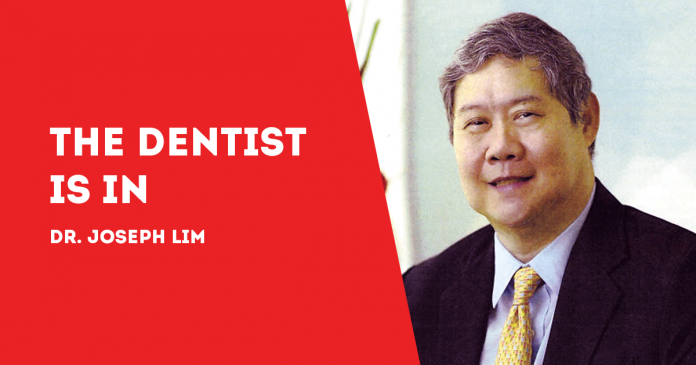
Dr. Joseph D. Lim, Ed. D., is the former Associate Dean of the College of Dentistry, University of the East; former Dean, College of Dentistry, National University; Past President and Honorary Fellow of the Asian Oral Implant Academy; Honorary Fellow of the Japan College of Oral Implantologists; Honorary Life Member of the Thai Association of Dental Implantology; and Founding Chairman of the Philippine College of Oral Implantologists. For questions on dental health, e-mail jdlim2008@gmail.com or text 0917-8591515./PN