


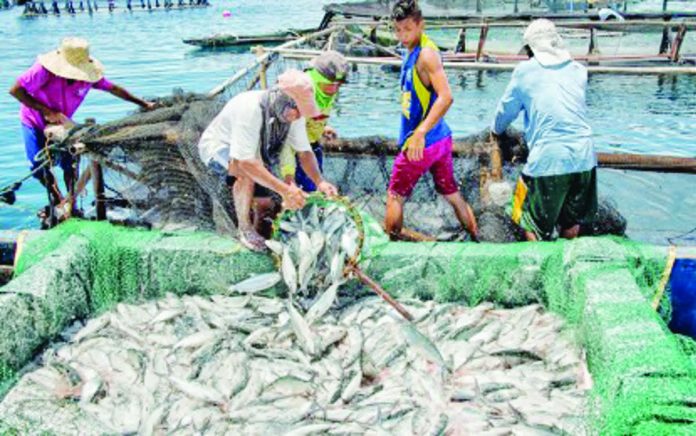
The Philippines is losing the equivalent of a fully loaded “jungle jet” of fish each day, according to a new study by marine advocacy group Oceana — a scale of decline that the organization and fisherfolk leaders said threatens the country’s food security, coastal livelihoods and the future of its fisheries.
At the launch of its comprehensive audit, Oceana called on President Ferdinand Marcos Jr. to declare a fisheries and food security emergency, warning that decades of weak enforcement and failed governance have pushed national fish stocks into what it described as “free fall.”
“The annual loss of 45 million kilograms of fish isn’t just a statistic,” Oceana Vice President Von Hernandez said. “If you want to visualize it, it’s the equivalent of emptying a fully loaded jungle jet of fish out of our waters every single day.”
A crisis beneath the waves
The report, “The Philippine Fisheries Assessment, A Glimpse of RA 10654’s 10-Year Implementation,” documents a 13-year decline that has cost the country nearly 600,000 metric tons of potential catch since 2010—enough, Hernandez said, “to provide a healthy meal to every Filipino for a month, gone.”
Oceana’s findings cite government data showing 88% of fish stocks are overfished and depleted, while total production fell from 2.6 million metric tons in 2010 to 1.9 million in 2023. The group’s satellite monitoring also detected thousands of night lights — indicators of commercial fishing activity — in areas meant to be reserved for small-scale fishers.
For communities that rely on the sea, the numbers translate into daily hardship. More than 350,000 fisherfolk families now live below the poverty line, with tens of thousands classified as “food-poor,” unable to meet even basic dietary needs.
“We are also starving the very hands that feed us,” Hernandez said. “The 2.5 million Filipino fisherfolk who put food on our tables are now living in dire straits.”
He warned the crisis is also erasing a way of life.
“The average age of Filipino fishers is now 50. The next generation of Filipinos is walking away from fishing,” Hernandez said. “So we are not just losing fish, we are losing an entire legacy of sustainable fishing.”
Oceana’s central demand is for the President to order an immediate, transparent investigation into what it called enforcement failures by key agencies and to halt any attempt to weaken the Fisheries Code and Republic Act 10654.
A ‘wake-up call’ for those in power
Instead, Hernandez said, the law’s science-based measures should be fully implemented — not amended.
On the ground, fisherfolk leaders echoed the call, framing the report as a final warning to authorities.
“Ang report na ito sana wake-up call sa kanila,” said Pablo Rosales, president of national federation PANGISDA Pilipinas. “Sa tagal-tagal ng pagkakabuo nila bilang Bureau of Fisheries and Aquatic Resources (BFAR), walang indikasyon ng pag-unlad, bagkus papaubos at nananatili ang mangingisda bilang number one na pinaka mahirap na sector sa Pilipinas.”
Rosales said small fishers have no desire to remain the country’s poorest sector—or to see the fisheries collapse altogether.
Oceana’s report, authored by fisheries scientists from the University of the Philippines Visayas, said the Philippines already has a strong legal framework but lacks the political will and coordination to enforce it. (Cristina Eloisa Baclig/@inquirerdotnet)